
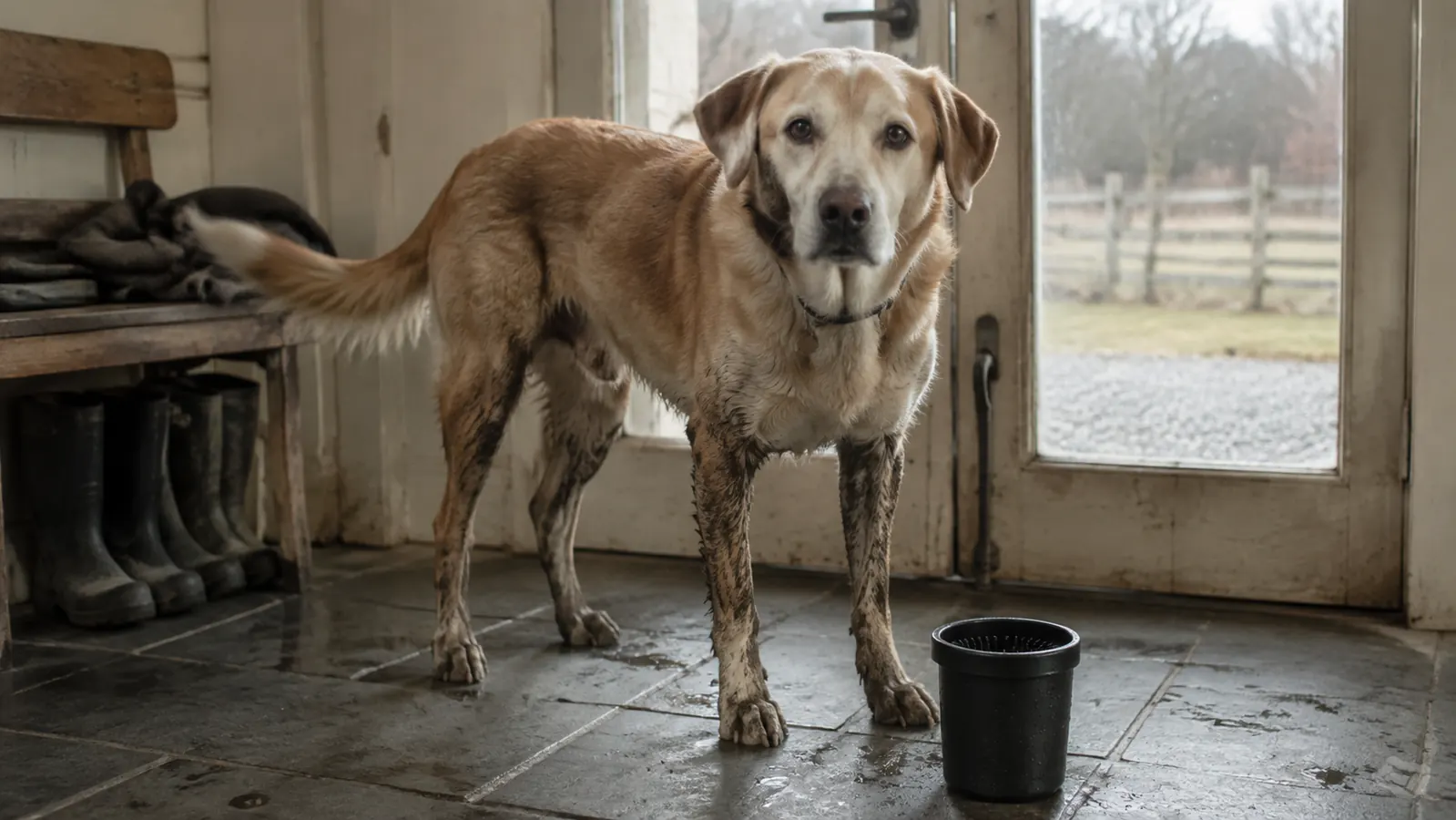
Ruggles heads straight for the wet spots. Doesn't matter if it rained an hour ago or a week ago, he finds the one patch of standing water or bare mud along the fence line and plants all four feet in it like he's signing his name. I bought the Dexas MudBuster back in late February, right around when our gravel drive turns into a strip of soup for about four months straight, because I was tired of chasing a seventy-eight pound Lab and hound mix around the mudroom with a rag before he tracked the whole yard onto my slate floor. That's the timeline here, one full mud season, late winter through spring, and the MudBuster is still sitting on the shelf by the back door instead of shoved in the hall closet where half the gear I buy for this house eventually ends up.
This isn't a lab study, it's what happened at my back door over four straight months with two dogs who couldn't be less alike about having their feet handled. Ruggles will hand you a paw like he's asking for a fist bump. Pearl, my twelve-year-old Cattle Dog mix with stiff hips and hearing that's mostly gone now, would rather chew off her own leg than let anyone mess with her feet, myself included on a bad day. If the MudBuster could get through a full mud season on both of them without turning into a wrestling match every single evening, I figured that was worth writing down.
The Quick Verdict
A genuinely useful mudroom tool that cut my nightly cleanup time in half over a full mud season, held back mostly by the fact that it still leaves a damp paw that needs a towel and a dog who has to agree to cooperate.
Amazon Check Today's Price →Tired of muddy paw prints marching across your kitchen floor?
The Dexas MudBuster is the one piece of mudroom gear that's stayed in daily use at my back door for a full mud season. Check today's price and make sure you order the size that matches your dog's actual paw width before it ships.
Amazon Check Today's Price on Amazon →How I've Used It
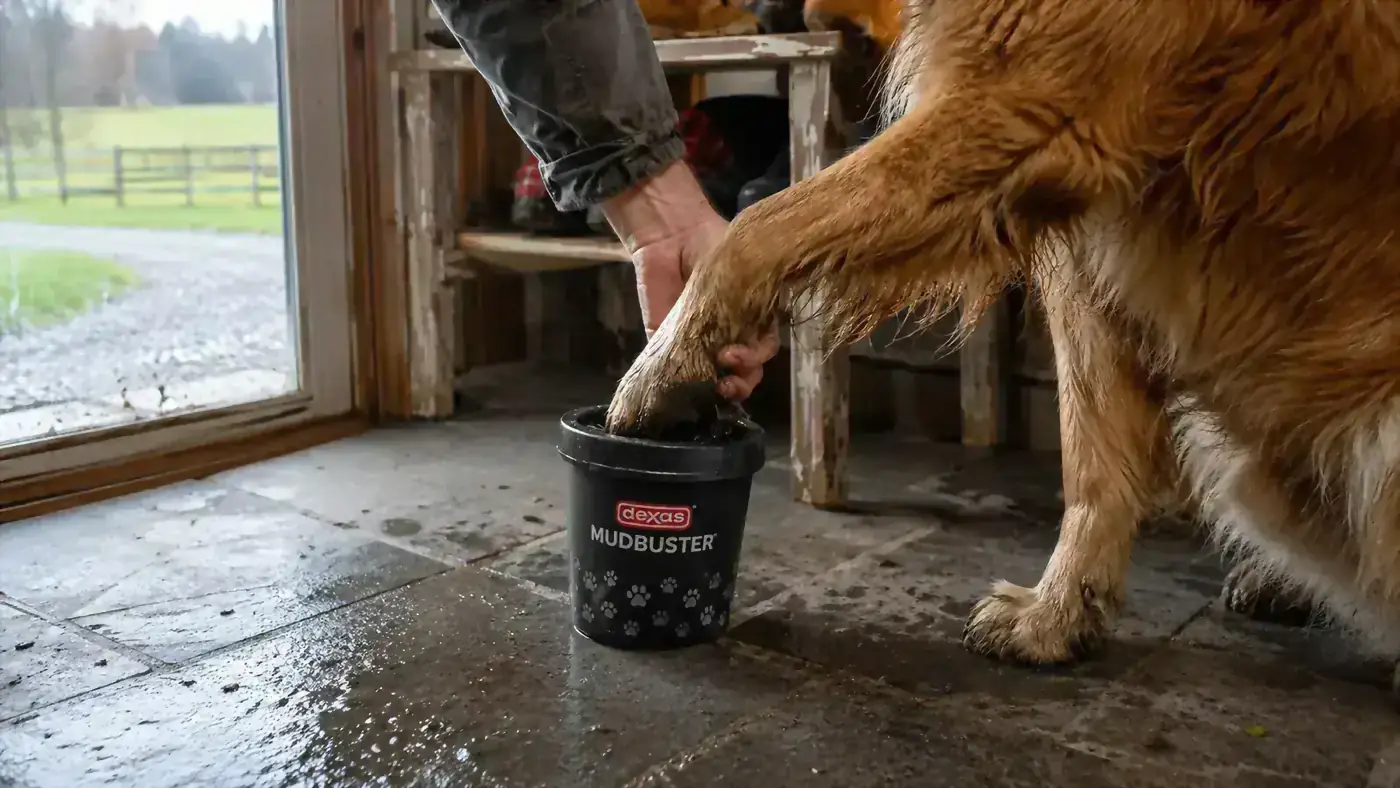
The routine is the same every evening it's rained, snowed, or the yard is just plain saturated, which around here covers most of late winter and all of spring. I keep the MudBuster sitting on the slate floor of the mudroom, filled about a third of the way with lukewarm water, waiting right inside the back door. When Ruggles comes in, I pick up one paw at a time, lower it into the cup, and give it a few gentle twists so the silicone bristles work through the mud packed between his pads. Four paws, maybe ninety seconds total once you've got the rhythm down, which is a fraction of what it used to take me scrubbing him down with a wet rag at the sink while he tried to escape toward the living room rug.
I picked the large size because Ruggles' paws run wide, closer to three inches across the pad, and an undersized cup would have meant cramming his foot in sideways or not getting real bristle contact at all. That sizing decision matters more than people expect going in. I didn't guess, I actually measured his paw against the size chart before ordering, and it's the reason this thing worked from day one instead of becoming another failed experiment.
Pearl took longer to come around. The first two weeks she'd plant her feet and lean the other direction the second she saw the MudBuster on the floor, which I expected given how she feels about her feet in general. I started just touching the cup to her paw without the twist, then working up to a quick dip, then finally the full motion by week three. She's never going to love it the way Ruggles seems to, but by the end of the season she'd stand still for it without a fight, which for a twelve-year-old with her opinions about foot handling is its own kind of win.
How the MudBuster Actually Works
The mechanics are simpler than I expected before I bought one. It's a rigid outer cup with a ring of soft silicone bristles lining the inside, and you fill the bottom section with water, low enough that it won't slosh out over the rim once a paw's inside but high enough to actually saturate the mud and work it loose. Too little water and you're just dragging a dry paw through rubber fingers, which does nothing. Too much and you end up with a puddle on the mudroom floor by the third dog you clean, which I learned the hard way in week one.
The twist motion is the actual cleaning action, not just the dunking. You lower the paw in, then rotate it gently a few times so the bristles flex against the pad and between the toes, which is where the worst of the packed mud actually hides. A straight up-and-down dunk barely touches that stuff. The twist is what breaks it loose, and once I got the hang of the motion, the water in the cup would visibly cloud up brown within the first two or three rotations, which told me it was actually pulling debris off rather than just wetting the surface.
Sizing to the paw is not a minor detail, it's the whole thing. Dexas makes this in more than one size, and the large I have is built for paws in the two and a half to three and a half inch range. Ruggles fits it well. If your dog runs smaller, a cup this size means the paw rattles around without enough bristle contact on the sides, and you lose most of the cleaning action. I'd rather size up slightly than down, since a paw with room to twist gets more bristle contact than one jammed in tight, but going too large loses contact from the other direction. Measure first.
Mud, Sand, and Road Salt Are Not the Same Fight
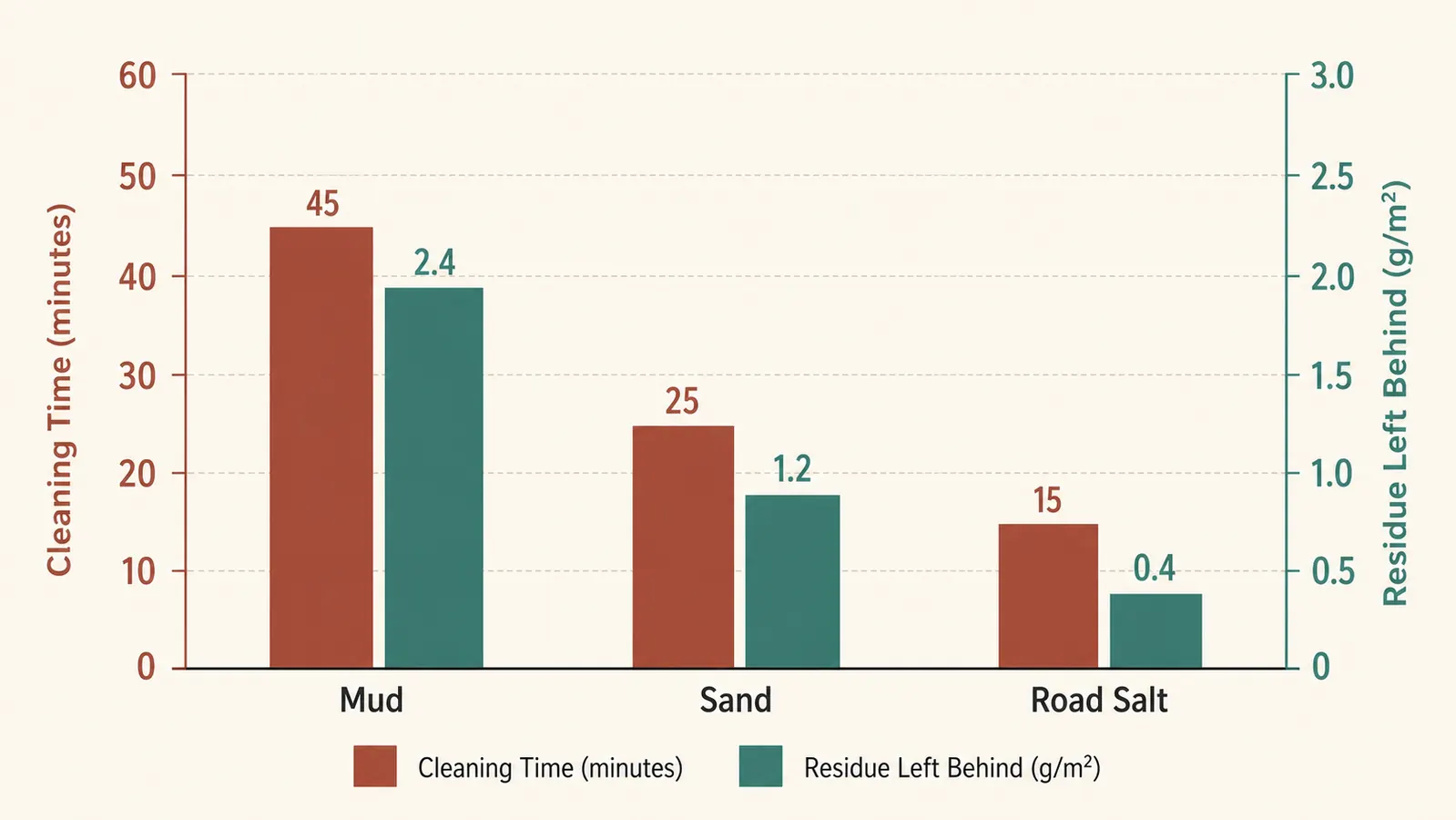
Four months of this told me the MudBuster is not a one-tool-fits-all solution, and I'd rather say that plainly than oversell it. Actual mud, the wet, sticky, clay-heavy stuff we get along the fence line and the low spot by the barn, is where this thing earns its keep. The silicone bristles combined with the twist and a bit of water break down packed mud between the toes faster than anything else I've tried, including the old bucket-and-rag method that used to eat fifteen minutes some nights.
Sand behaves differently. It doesn't clump the way mud does, so a lot of it just sifts through the bristles and settles in the bottom of the cup rather than sticking to the paw pad in the first place. The MudBuster still helps, mostly by rinsing loose grains out from between the toes, but it's not the dramatic before-and-after you get with real mud. I noticed this most on a trip to Alison's place near the water, where her fostered dogs track in sand instead of clay and the cup's water needed changing after every single dog instead of every two or three like it does with mud.
Road salt and the gritty deicer residue from a cold snap in March was the toughest test. That stuff doesn't just sit on the surface, it works into any cracked or dry pad and can sting if it's left there. The MudBuster's water and twist rinse the visible grit off well enough, but I still wipe each paw with a damp cloth afterward during salt season just to make sure nothing's left in the cracks, since that's the one condition where I don't fully trust a rinse alone to do the whole job.
The Towel Step Nobody Skips
Here's the part that surprised exactly nobody once I actually thought about it. The MudBuster gets the mud, sand, and grit off. It does not dry the paw. A rinsed paw is a wet paw, and a wet dog walking across a slate floor is its own small hazard, especially with Pearl's hips being what they are these days. So every single cleaning ends with a towel, no exceptions. I keep one hanging on a hook right next to the cup specifically for this, and it's genuinely part of the routine rather than an afterthought I sometimes skip.
I went into this expecting the MudBuster to replace the towel step entirely and it doesn't, and I think reviews that pretend otherwise are setting people up to be annoyed on day one. What it replaces is the scrubbing, the standing at the sink working mud out of four paws with a washcloth while a seventy-eight pound dog tries to shake water across the kitchen. The towel step now takes ten seconds per paw instead of being the whole ordeal. If you want the fuller side-by-side on exactly where a towel alone falls short compared to using the cup first, I laid out the full comparison in MudBuster versus towel drying.
One thing I didn't expect going in was how much faster the whole four-paw process got once Ruggles learned the sequence. By month two he'd offer the next paw before I even reached for it, which cut real time off the routine. Pearl never got there, and probably never will given how she feels about the whole business, but even her four paws with more coaxing involved still finishes well under the old rag-and-sink method.
Where This Fits Into a Full Mud Season
I want to be honest about what four straight months of daily use actually looks like, because the marketing photos make it look like a thirty-second miracle every time and real life has more friction than that. Some nights Ruggles comes in only lightly dusty and the whole process is quick and easy. Other nights, after a hard rain when the low spot by the barn turns into standing water, he's caked halfway up his legs and the MudBuster is handling the paws while I'm still toweling down shins and hocks by hand, because the cup was never meant to reach past the pad and lower leg anyway.
The water needs changing more often than I expected in the thick of it, sometimes after just two dogs' worth of cleaning during the muddiest stretch in March. I keep a pitcher by the mudroom sink now just for topping it off, which sounds like a small thing but it's the difference between a tool that's genuinely part of the routine and one that quietly becomes more hassle than the problem it solves. If you're not willing to dump and refill water regularly during the worst weeks, you'll end up swishing paws through what's basically diluted mud soup by the third or fourth cleaning.
What I Liked
- Cuts real cleanup time roughly in half compared to a rag and sink, especially on true mud
- Silicone bristles plus the twist motion actually work debris out from between the toes, not just off the surface
- Sized correctly, it fit Ruggles' wide paw well and held up through a full mud season of daily use
- Easy to keep right by the back door as a genuine part of the evening routine, not a gadget that migrates to a closet
- Works noticeably better on true mud than it does on sand or road salt residue
Where It Falls Short
- Still requires a towel afterward, a wet paw is not a dry paw
- Water needs frequent changing during the muddiest stretches or it stops doing much good
- Sand mostly settles instead of scrubbing off the way clay-heavy mud does
- A dog who genuinely hates having feet touched will need real patience before this becomes easy
- Doesn't reach mud higher up the leg, only the paw and lower pad area
Four months in, the towel by the back door has changed more times than the MudBuster ever needed replacing. That's the part that actually convinced me.
Who This Is For
This is built for a household dealing with real, regular mud, a yard with a low spot, a gravel drive that turns to soup, a dog that goes looking for the wettest patch available like Ruggles does. It's especially useful if you've got a dog whose paws are wide enough to actually fill the cup properly, since the sizing is what makes the twist motion effective in the first place. If you're trying to decide between committing to a routine like this or just towel-drying at the door, I broke down the honest tradeoffs in my full honest review, including the parts of the marketing that oversell how instant this actually is.
Who Should Skip It
Skip it if your main problem is sand rather than mud, since a shake-off and a towel will get you most of the way there without the extra step. Skip it too if your dog has a genuine, ongoing fear response to having feet handled that goes beyond normal reluctance, because forcing the issue with a new tool is a good way to make that fear worse rather than better. And if you're not going to commit to changing the water regularly during the wettest weeks, you'll end up disappointed with results that look more like smearing than cleaning.
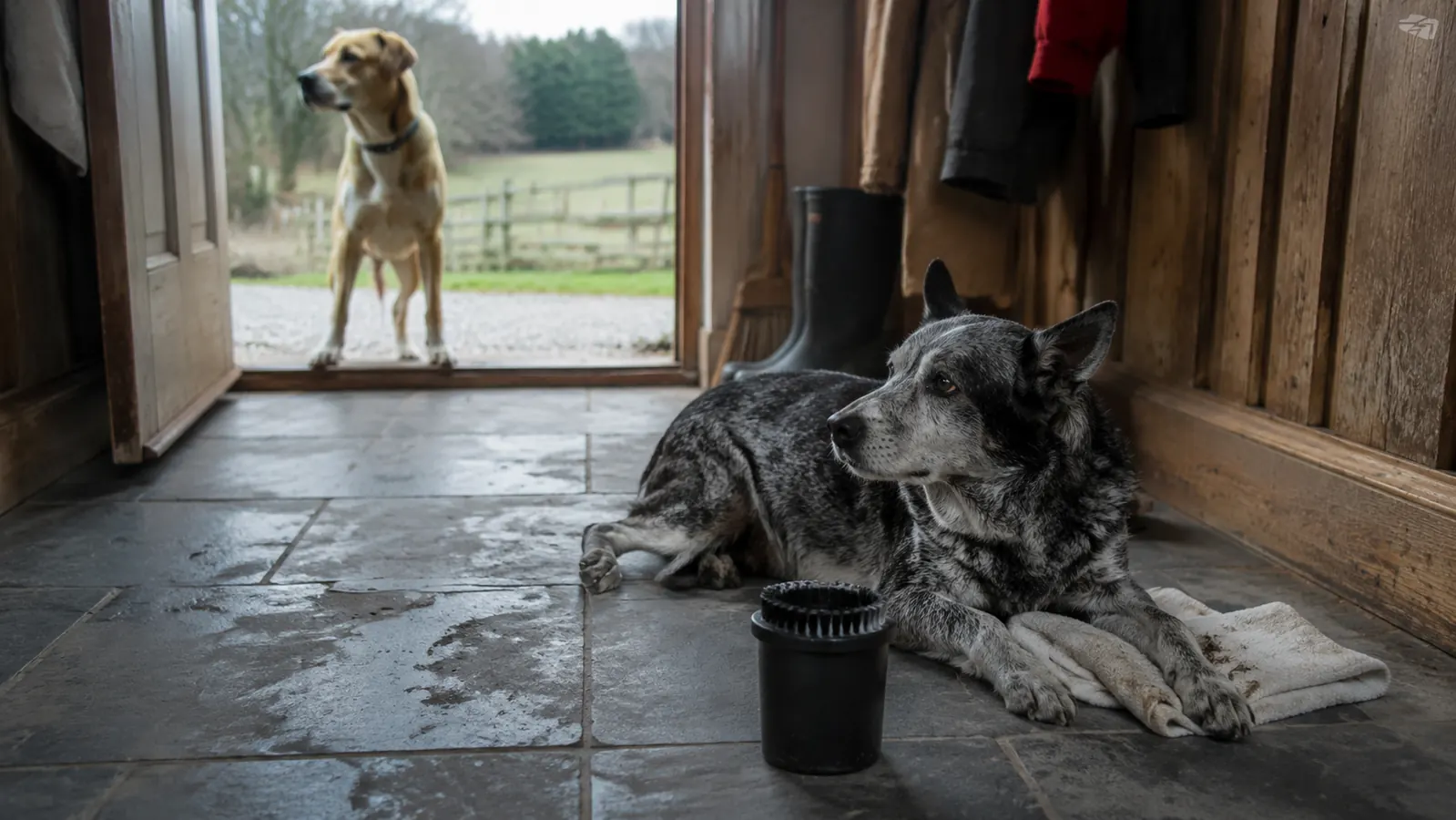
One full mud season in, and it's still by the back door every night.
If your dog treats every puddle like a personal invitation, check today's price on the Dexas MudBuster and measure your dog's paw width before you order so you get the size that actually works.
Amazon Check Today's Price on Amazon →