
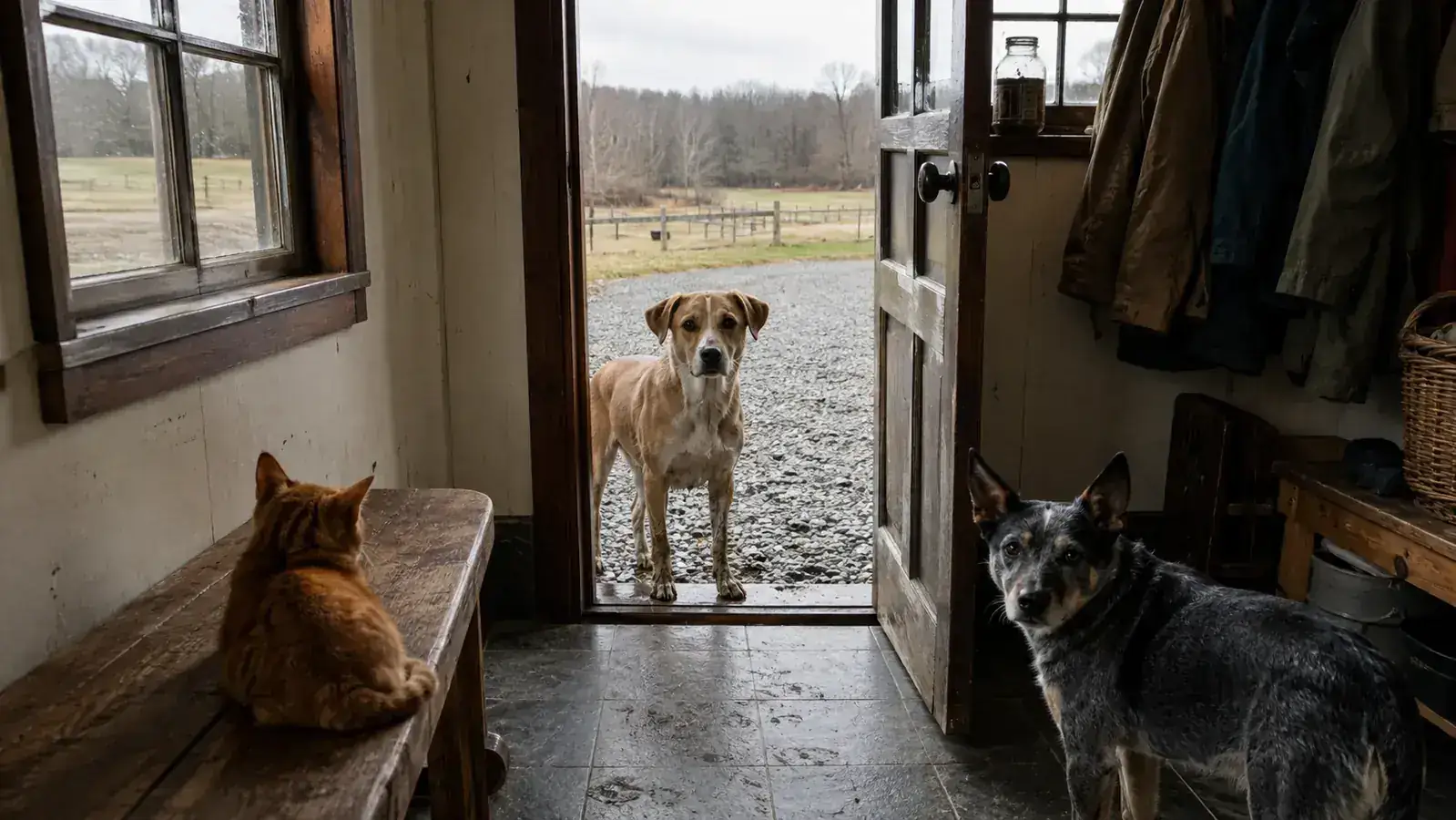
Mud season at our place isn't a week, it's practically a fourth season, roughly four months running from late winter into spring, and every one of those months used to end at my mudroom floor. Ruggles, our seven-year-old Lab/hound mix, treats standing water and half-thawed dirt as a personal invitation. The gravel drive turns to soup, the fence line goes soft, and by the time he makes it across the yard to the slate floor his feet look like he waded through a chocolate milkshake. I tried towels for years, a bucket by the door, an old rag that never fully dried between uses. What actually changed things, over that first full mud season we tested it, was a MudBuster, the twist-cup silicone paw cleaner Dexas makes, and figuring out how to actually use the thing instead of just fighting the dog with it every single time he came inside.
This is the how-to for the actual routine, not the review. If you want my longer take on whether the MudBuster earned a permanent spot after a full four-month mud season, I wrote that up separately. What I want to cover here is the boring, practical stuff nobody puts in the packaging: where to actually put the thing, how full to fill it, which paw goes first, what to do when your dog would rather chew off her own leg than let you touch her feet, and what changes once road salt starts showing up on the driveway in January. None of it is complicated once you've done it a dozen times. It just isn't obvious the first time you unbox a MudBuster and stare at that silicone cup wondering how a wet, muddy paw and a plastic container are supposed to end this peacefully instead of in a wrestling match on the kitchen floor.
Stop cleaning up the same muddy footprints every single day
If your dog treats every walk as an excuse to bring the yard inside, a MudBuster by the door turns a five-minute floor scrub into a thirty-second stop before he even reaches the kitchen.
Amazon Check Today's Price on Amazon →Step 1: Set Up a Real Station by the Door
The single biggest mistake I made the first month was treating the MudBuster like a tool I'd grab when I remembered it. It lived in a closet. Ruggles would come barreling in from the yard, I'd realize too late, and we'd be back to towels on the slate floor. The fix was embarrassingly simple: the MudBuster lives permanently on a rubber mat inside the mudroom door, filled and ready, from the first thaw in February through the last soggy week of May.
A station means three things within arm's reach: the MudBuster itself, a hand towel for the final pass, and a second dry towel for the dog's belly and legs if the mud got that high. I keep an old bath towel folded on a hook right above the cleaner. Gene laughed at me for treating a dog paw washer like a surgical setup, until he tracked mud through the kitchen twice in one week and quietly started using the MudBuster station himself. On busy mornings when everyone is late for something, having the whole setup already assembled is the only reason the routine survives at all. If I had to dig out the MudBuster, fill it, and hunt down a towel every single time, we would have quietly given up on it by March.
Placement matters more than people think. If the MudBuster sits even six feet from the door, a dog who's already excited to be inside will bypass it, feet and all, before you can grab a collar. Ours sits close enough that Ruggles has to physically walk past it to get to the rest of the house, which turns the whole routine into muscle memory instead of a negotiation every time.
Step 2: Get the Water Level and Temperature Right
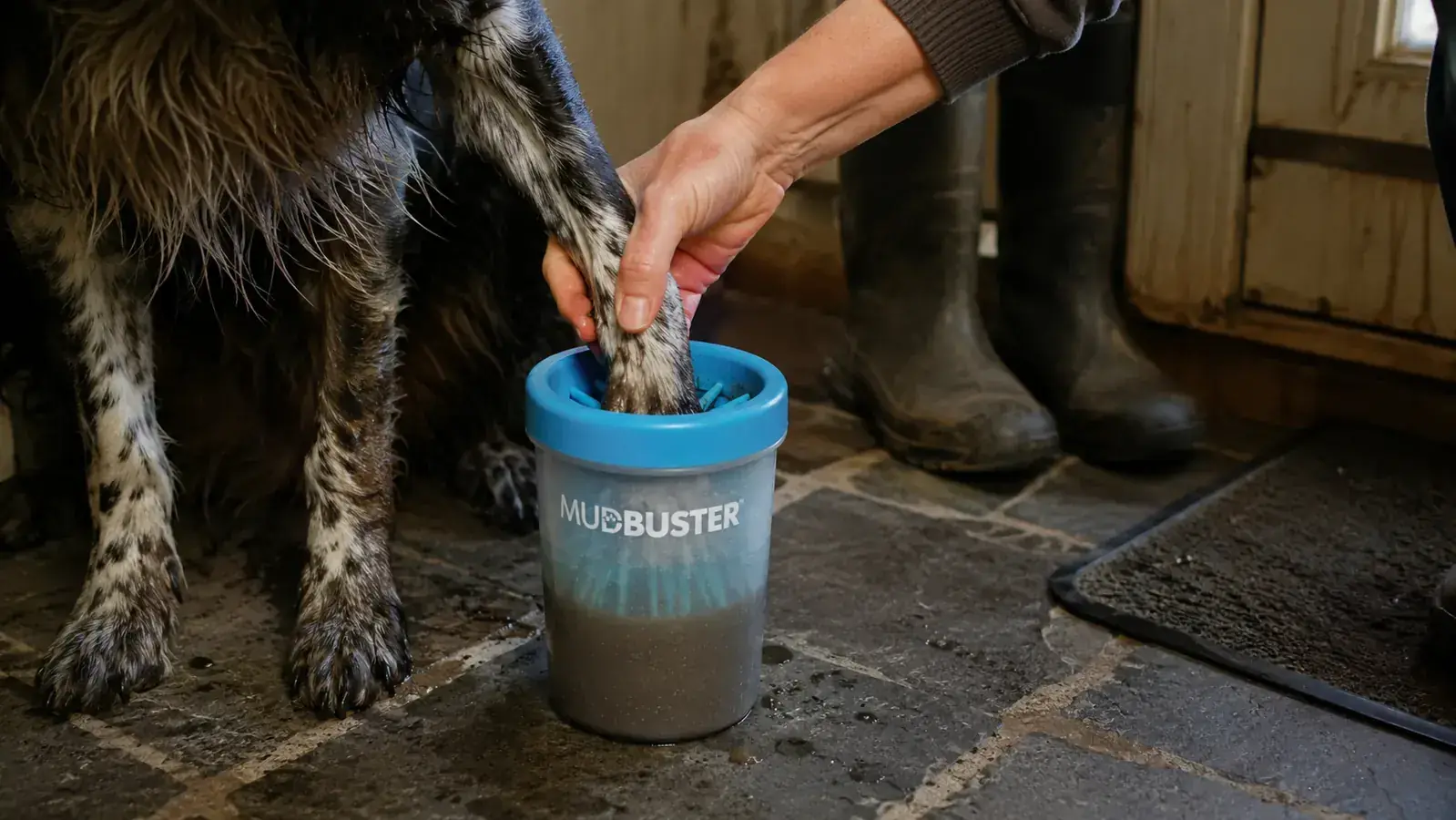
The MudBuster only works if there's enough water in the cup to actually surround the paw, not just wet the bottom of it. I fill mine about two-thirds up the silicone bristles, enough that when Ruggles's foot goes in, water pushes up around his pad and between his toes. Too little water and you're basically just wiping a dry brush against a dirty paw, which does almost nothing.
Temperature is the part nobody mentions in the instructions. Straight from the tap in February, that water is cold enough that Pearl, our older Cattle Dog mix, will yank her foot back before you've even started twisting. I keep a kettle near the mudroom sink now and cut the chill with a splash of hot water so it's cool but not icy. It sounds fussy. It is fussy. It's also the difference between a dog who tolerates the MudBuster and one who bolts the second she sees it filled.
By April, the frost is out of the ground and the tap water runs closer to bearable on its own, so fussing over temperature matters most in that early stretch, February and March, when a cold snap makes even a quick paw dip feel like a small betrayal to a dog. Knowing the MudBuster routine gets easier as the season turns is one of the more encouraging parts of the whole four months.
Step 3: Learn the Twist Motion and Work the Paws in Order
The twist is the whole trick to the MudBuster. You're not scrubbing up and down like you would with a washcloth. You hold the paw still, let the dog's own foot sit in the cup, and gently rotate it a half turn one way, then back the other way, letting the silicone bristles do the work against the pad and between the toes. Two or three twists per paw is usually enough once the mud isn't caked on solid.
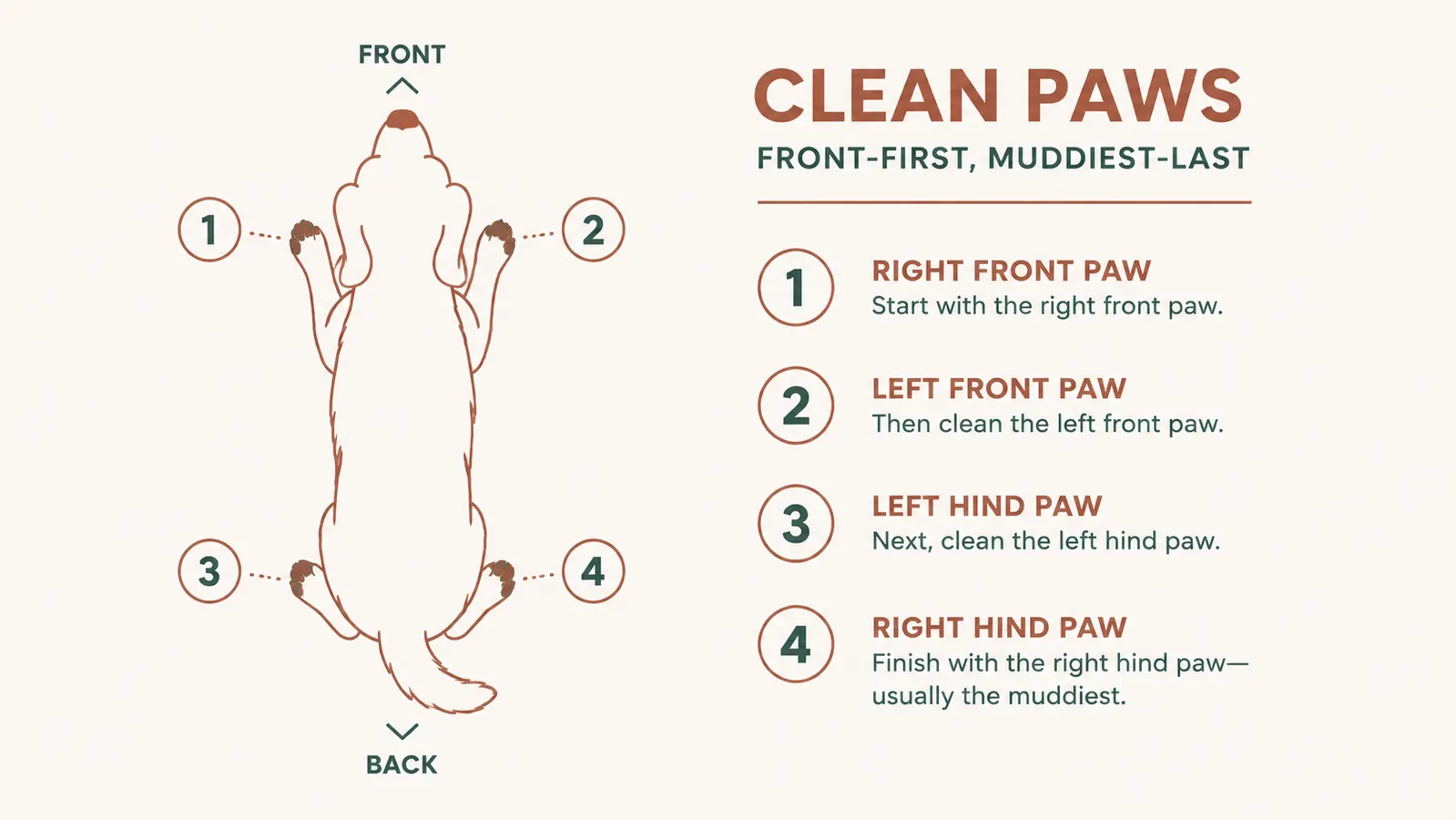
Order matters more than I expected. I always start with whichever front paw Ruggles offers first, since dogs are surprisingly opinionated about which foot they'll give you without a fight. Front paws first, back paws last, because by the time you get to the back feet the dog has usually settled into the process and stopped treating each new paw like a fresh betrayal.
I also learned to do the muddiest paw last, not first. If you start with the worst one, you've dumped the dirtiest water into the cup before you've cleaned the other three, and by paw four you're just moving mud around instead of removing it. Save the disaster paw for the end and swap the water if it's gone visibly brown before you're done with all four.
Step 4: The Dog Who Hates Having Her Feet Touched
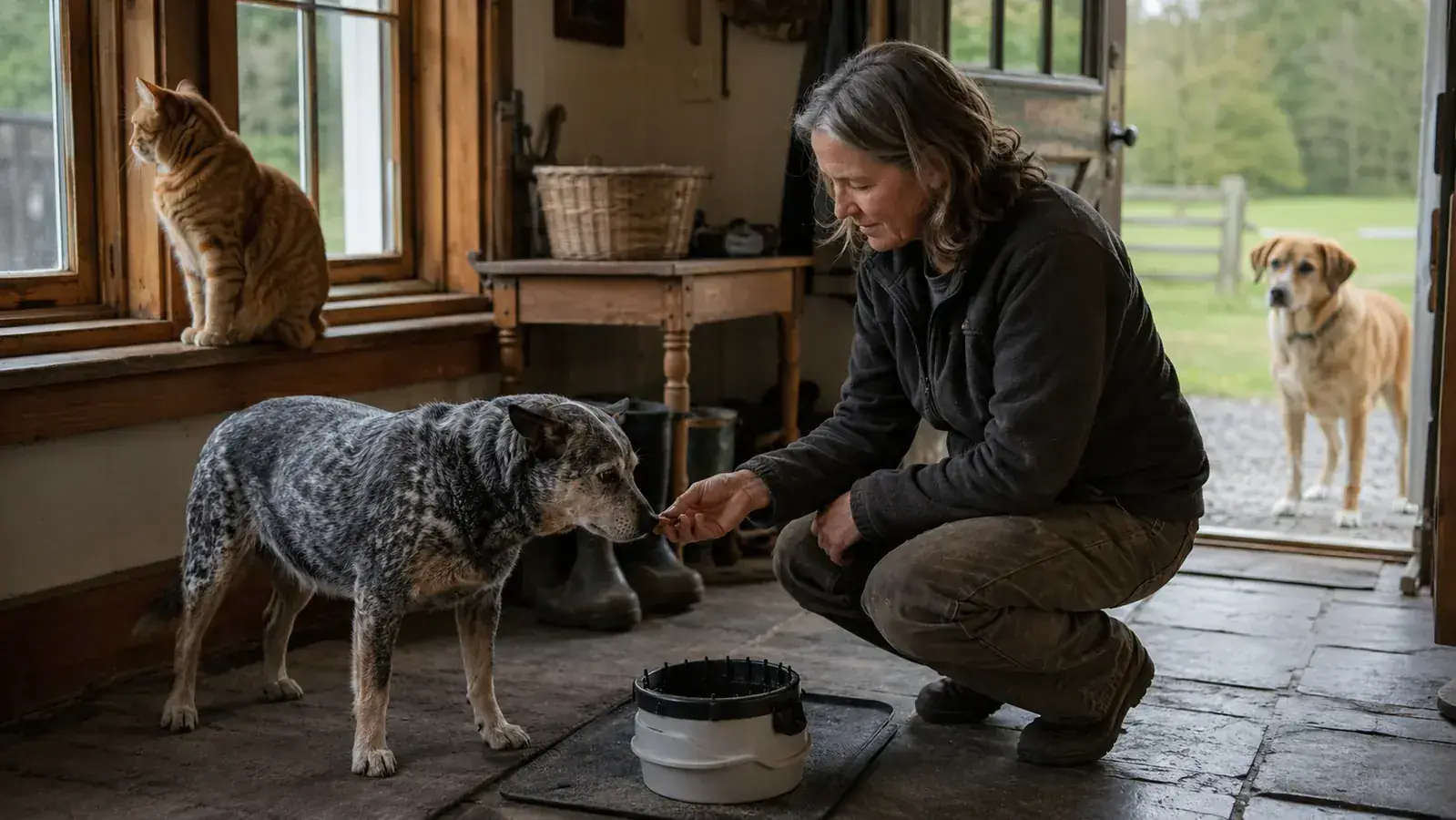
Pearl is twelve, has stiff hips, and has never in her life enjoyed anyone touching her feet, MudBuster or otherwise. The first time I tried to use it on her she planted all four legs and looked at me like I'd suggested something genuinely unreasonable. If your dog is like that, don't start with the actual cleaning. Start with nothing in the cup at all.
For about a week, I just had Pearl walk past the empty MudBuster, sniff it, and get a small treat every single time she came near it without flinching. Then I added an inch of room-temperature water and rewarded her for letting one paw dip in for a second, nothing more, treat, done. No twisting, no scrubbing, just paw in, treat, paw out. It took closer to ten days before she'd tolerate the actual twist motion on all four feet without pulling away.
The mistake most people make with a foot-shy dog is trying to power through the first time because the floor is filthy and they're in a hurry. That backfires every time. A dog who has one bad experience with a paw cleaner will fight you on it for months. Slow, boring, treat-heavy sessions during a calm moment, not right after a muddy walk, got Pearl to a place where she now offers her paw to the MudBuster without much fuss at all.
A dog who's had one bad experience with a paw cleaner will fight you on it for months. Slow and boring wins that argument every time.
Step 5: Dumping, Rinsing, and Handling Winter Road Salt
After every dog, the water in that MudBuster needs to be dumped and rinsed, not reused for the next round the next day. Mud settles fast, and by the second use the water is basically diluted dirt, which just recoats the paw you're trying to clean. I dump mine straight into the utility sink, give the silicone bristles a quick rinse under the tap, and let it air dry upside down on the same mat it lives on.
Road salt changes the whole routine once winter edges into that four-month mud stretch. Salt residue doesn't rinse off as easily as plain mud, and it's the stuff that actually irritates a dog's pads if it's left between the toes. When Ruggles has been out on salted sidewalks or our own treated driveway, I run the MudBuster twist through twice, dump and refill with genuinely warm water for the second pass, and check between his toes by hand afterward for any gritty residue the twist missed.
This is also where the towel-only routine falls apart fastest. A towel smears salt around instead of lifting it out, and I've had a vet mention that residual salt is a common cause of small pad cracks in dogs who walk on treated surfaces all winter. The MudBuster actually flushes salt out of the pad instead of just pressing it in deeper, which is the whole reason I keep using it through the coldest, grittiest stretch of the season instead of going back to a rag by the door. It also means one less thing to explain to Alison when she borrows the mudroom setup for a foster dog fresh off a walk through a salted parking lot.
What Else Helps
The MudBuster handles the paws, but it's not the only piece of the mud season routine. A rubber-backed mat right at the threshold catches whatever drips off during the cleaning itself, and a second, cheaper towel by the door catches bellies and legs the cup can't reach. If you want the fuller case for why a dedicated paw cleaner earns a permanent spot instead of getting shoved in a closet after the first excited purchase, I laid it out in a separate piece. None of it replaces the MudBuster itself, it just makes the four months around it less chaotic, and by the time the ground dries out for good in late spring, the whole routine barely takes any thought at all. Keeping a spare towel in rotation matters too, since a damp one left hanging all day never fully dries in a Pennsylvania February and starts smelling like a wet dog on its own.
One mud season is all it takes to know if this earns a permanent spot by your door
Ours has stayed on the mat through four straight months of gravel-drive mud and winter road salt without a single week off. If your floors are taking the same beating ours were, this is the fix that actually stuck.
Amazon Check Today's Price on Amazon →