
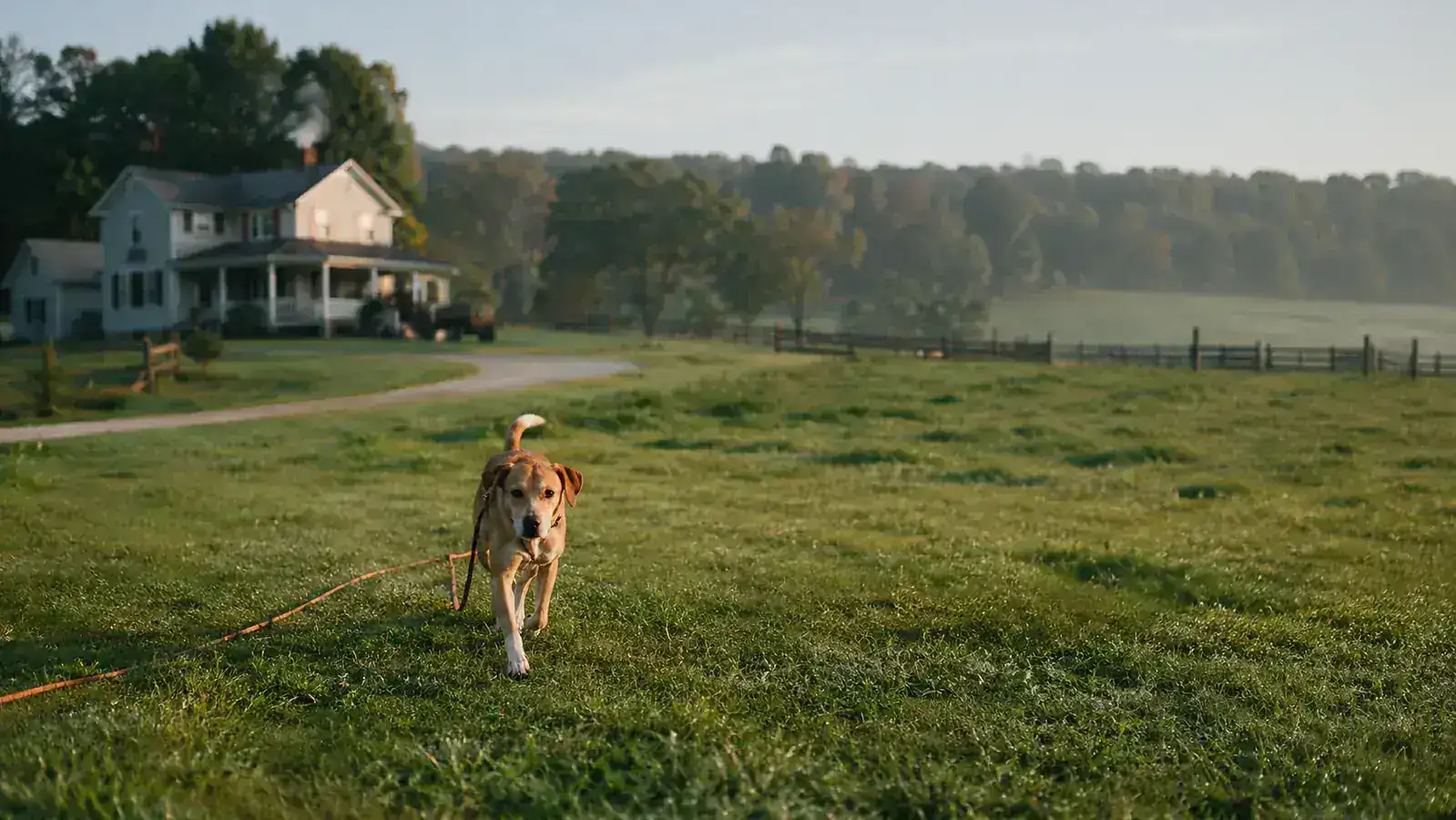
Ruggles is a seven-year-old Lab and hound mix, seventy-eight pounds, and when his nose catches a scent trail across the back field there is no command in existence that beats it back. Not "come," not a whistle, not a handful of hot dog pieces waved over my head. I bought the Hi Kiss long line at the start of last spring because I was tired of chasing him down the gravel drive at six in the morning in my bathrobe, and I wanted a way to practice real off-leash-style recall without actually betting on it.
This review covers a full season with the Hi Kiss line, roughly five months, spring through early fall, used almost daily in the fenced half-acre, the open field behind the property, and a couple of trips to a dog park two towns over with my daughter Alison, who fosters dogs and was curious enough to borrow it for a weekend. Five months is long enough to know if a piece of gear earns a permanent hook by the back door or ends up buried in the hall closet with the retractable leash nobody trusts anymore. It's also long enough to see how the material holds up once it's been dropped in mud, dragged through gravel, and left out in the rain more than once because I forgot to bring it in.
The Quick Verdict
A genuinely useful recall-training tool for a dog with a strong nose and weak listening skills, as long as you respect what thirty feet of moving line can do to bare hands.
Amazon Check Today's Price →Still Chasing Your Dog Down the Driveway?
The Hi Kiss long line gave me back control at distance without cutting off the freedom that makes recall training actually stick. Check today's price and see the length options.
Amazon Check Today's Price on Amazon →How I've Used It This Season
I clipped the Hi Kiss line onto Ruggles' harness, never his collar, and started in the fenced half-acre where a mistake wouldn't cost me anything but a little dignity. The first two weeks were just letting him drag it around while he sniffed the treeline, so he'd stop noticing the line as a leash and start treating the field as normal moving-around space. Once he ignored the line completely, I started calling him mid-sniff and reeling in slack hand over hand instead of yanking, which the Hi Kiss line's flat webbing made easy to do without the rope biting into my palms.
By week four I'd moved to the open field behind the property, gate closed, line let out to its full thirty feet. This is where the Hi Kiss line earned its keep. Ruggles could get far enough away to actually test his choice between the scent trail and me, which is the whole point of long line work. A six-foot leash never tests that. A retractable leash lets a dog build momentum and then jerks them back, which teaches nothing except that the leash sometimes surprises you.
By midsummer we'd graduated to a dog park two towns over, the kind with a mowed field and enough space to let a thirty-foot line lie flat without wrapping around another dog's legs. I always went at off hours, right at dawn or just before closing, because a long line in a crowded park is a tripping hazard for everyone, not just Ruggles. That's a real limitation of the Hi Kiss line and any long line like it, not something the packaging bothers to tell you.
The Line Itself: Length, Material, and Clip
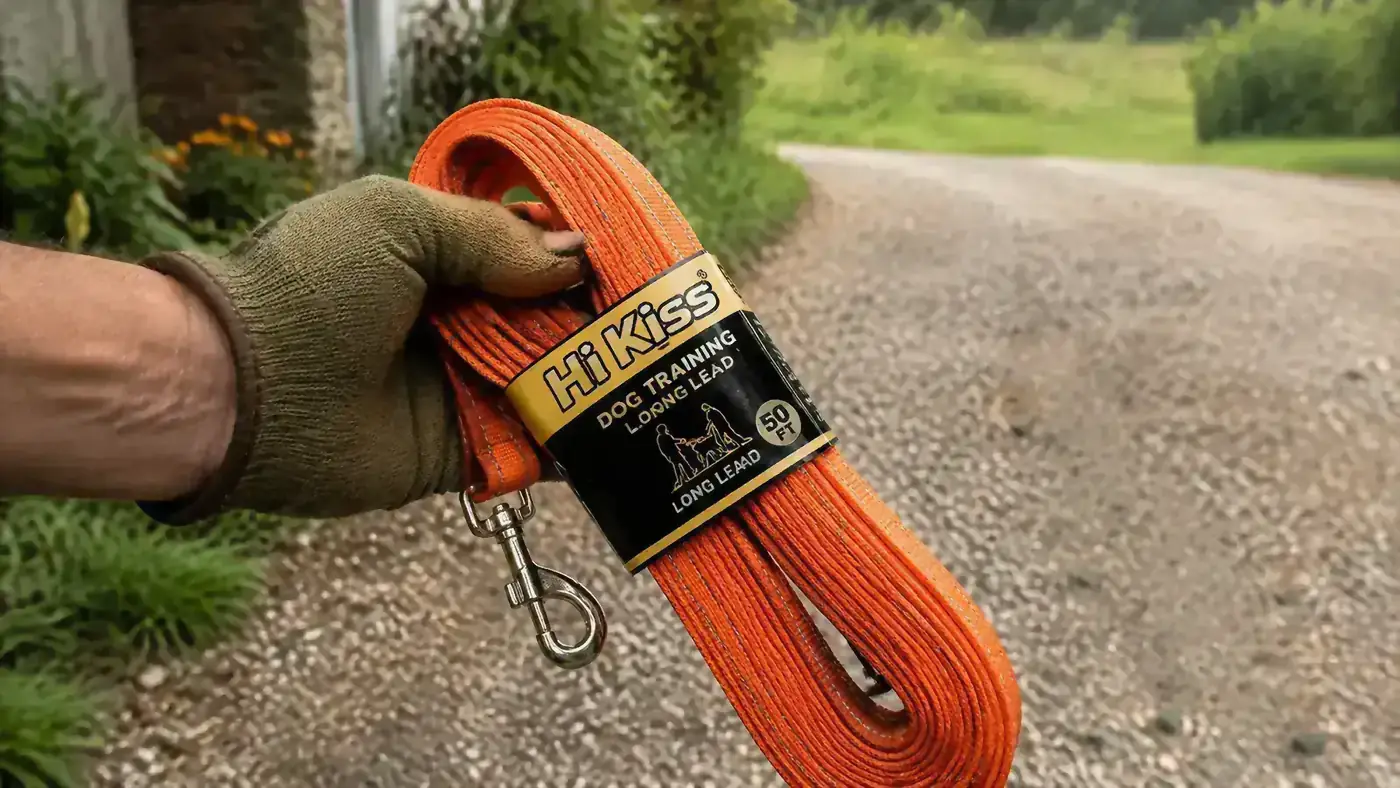
The Hi Kiss line I used is flat nylon webbing rather than round rope, which matters more than it sounds like it should. Round rope long lines dig into a palm under tension and tangle into knots that take five minutes to pick apart with cold fingers. The flat webbing on the Hi Kiss line lies flatter in a coil, resists knotting when it's dropped in grass, and is noticeably kinder to skin when you're taking up slack quickly, which is exactly the moment a round line tends to bite.
It comes in lengths well beyond the thirty feet I settled on, and I'd tell most people starting out to resist the urge to buy the longest option available. Thirty feet in an open field is already more distance than most handlers can manage cleanly, watching for tangles, keeping the line off the dog's legs, and staying ready to take up slack fast. A hundred feet sounds impressive on the product page and turns into an unmanageable pile of rope the first time a dog runs a wide loop around you.
The clip is a standard bolt-snap, nothing fancy, and it never once popped open on its own across five months of use, including a few hard hits when Ruggles reached the end of the line at a dead sprint chasing a rabbit that got away clean. That's the one piece of hardware I actually worried about before buying, since a clip failure at distance means losing the dog entirely, and the Hi Kiss line's clip held every time I tested it.
The Field, the Park, and the Driveway
The gravel drive is where recall training actually gets tested against real distraction, because that's where the mail truck comes, where Gene pulls in from a night shift, where the neighbor's cat sometimes crosses. I ran short recall drills there with the Hi Kiss line clipped short, maybe ten feet of it played out, so I had enough slack to let him choose but enough control to stop a bad decision before it happened.
In the fenced half-acre, the full thirty feet gave Ruggles room to range without any real risk if he blew off a first cue. That's the setting I'd recommend to anyone starting long line work with a hound-nosed dog. You want enough space that the dog forgets you're attached, and a fence behind you in case the whole session falls apart.
The open field is where the line does its best work and also where it's the most annoying to manage. Thirty feet of webbing dragging through wet grass picks up seed heads, mud, and the occasional burr, and by month three the clip end had a permanently faded look from being dropped in dirt over and over. It's still functional. It just doesn't look new anymore, which is fine for training gear and not something I care about.
What Changed With Ruggles' Recall Over Five Months
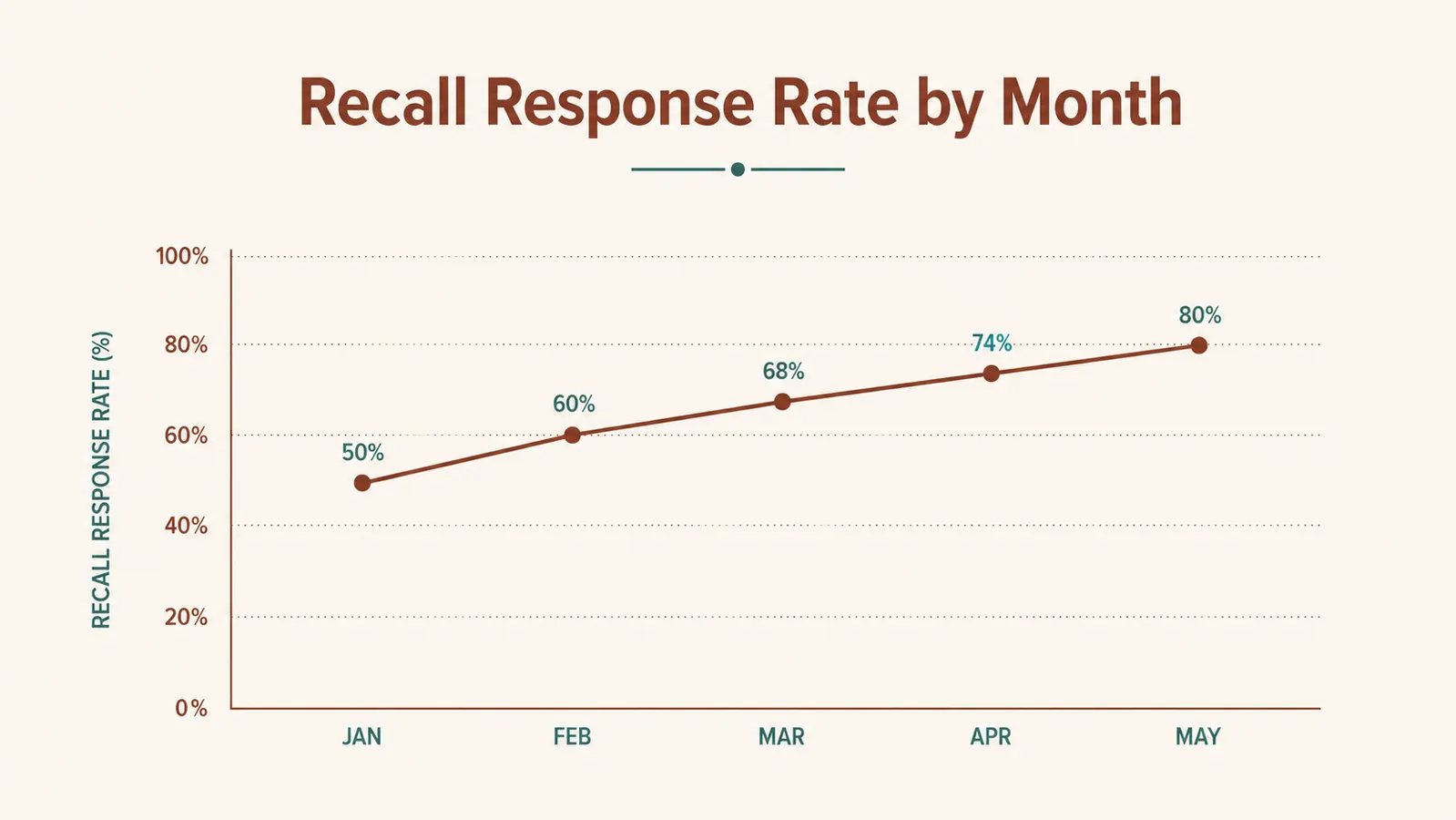
Month one, Ruggles came back maybe half the time I called him, and only if I had food in my hand. Month two, the percentage climbed but the delay didn't. He'd hear me, look at me, finish whatever he was smelling, and then come. That's actually normal and I didn't push him past it, because a rushed recall command that gets ignored repeatedly is worse than a slow one that eventually works.
By month three, using the Hi Kiss line to interrupt him at the exact moment he chose the smell over me, and rewarding hard the instant he turned, the delay started shrinking. By month four he was coming on the first call in the fenced yard close to every single time, and in the open field maybe eight times out of ten, which for a Lab-hound mix with seventy-eight pounds of built-in stubbornness is a real result.
I never once tried this off leash entirely, not by month five and not now. The whole value of the Hi Kiss line was building a recall I could trust while still holding a physical backup. Anyone telling you a long line gets a dog to reliable off-leash recall by itself is skipping the part where you eventually have to test it without the line, which is its own separate and slower process.
The Tradeoffs Nobody Mentions
The biggest tradeoff is rope burn. If Ruggles hit the end of the line at a dead run before I'd taken up slack, the webbing moving fast through a bare hand will burn, and it happened to me twice before I started wearing a light garden glove on my line hand every single session. That's not a defect in the Hi Kiss line, it's just physics, but nobody puts a warning label on the box big enough to actually stop you the first time.
I never tied the line to a fence post, a picnic table, or Gene's belt loop, and I'd tell anyone else not to either. Thirty feet of line under sudden tension can snap a wrist or drag a person off their feet, and looping it around something fixed just means the sudden stop happens somewhere you can't control. Hold it, manage the slack, and if you need both hands free, put the dog away instead.
I also never clipped it to a collar for distance work, only ever to a harness. A sudden hard stop at the end of thirty feet of line puts real force on a dog's neck if it's collar-clipped, and that's exactly the kind of injury that's easy to avoid and hard to undo. The Hi Kiss line's clip works fine on either attachment point, so the choice of where to hook it is entirely on the handler.
Alternatives I Considered First
Before buying the Hi Kiss line I looked hard at a retractable leash, which I already owned and already distrusted after the mechanism jammed twice with Ruggles at a dead run. I laid the two out side by side in a separate long line versus retractable leash breakdown, but the short version is that a retractable teaches a dog that tension comes and goes unpredictably, while a long line stays consistent from start to finish.
I also considered just doing recall drills in the fenced yard forever and skipping a long line entirely. That works fine if your dog never leaves a fenced space, but Ruggles goes to the field, the vet, and the foster intake meetups Alison drags us to, and none of those are fenced. If your situation is different, my honest rundown of the Hi Kiss line's tangling and clip quality covers the parts of ownership that matter more once the training itself is already going well.
What I Liked
- Flat webbing is easier on bare hands than round rope
- Thirty feet is enough distance to actually test a real recall choice
- Works on a harness without adding neck strain at distance
- Bolt-snap clip never popped open, even under hard hits
- Held up through a full season of field, gravel, and mud without fraying
- Cheap enough that losing one to a bad tangle isn't a disaster
Where It Falls Short
- Can cause rope burn if a dog hits the end at full speed without a glove
- Picks up mud, seed heads, and burrs constantly in tall grass
- Not something you can safely use in a crowded dog park
- Clip end shows wear faster than the line itself
A long line doesn't train recall. It just gives you a chance to catch the exact moment your dog chooses you over the smell, over and over, until choosing you gets faster.
Who This Is For
This is for anyone with a dog whose recall is unreliable specifically because of distraction, not fear or anxiety, a dog like Ruggles who is happy and confident but has a nose or a prey drive that wins the argument every time. It's for people with access to a field, a fenced yard, or any open space, since a long line is close to useless in a cramped backyard or an apartment hallway.
Who Should Skip It
Skip the Hi Kiss line if your dog is reactive or fearful around other dogs and people, since managing a thirty-foot line during a reactive episode is genuinely dangerous for everyone nearby. Skip it too if you don't have any open space to use it in, because a long line dragged around a small yard just becomes a tangle risk with none of the training benefit.
Ready to Stop Chasing and Start Training?
A full season with the Hi Kiss line took Ruggles from ignoring me completely to a recall I trust in the open field. See today's price and pick the length that fits your space.
Amazon Check Today's Price on Amazon →