
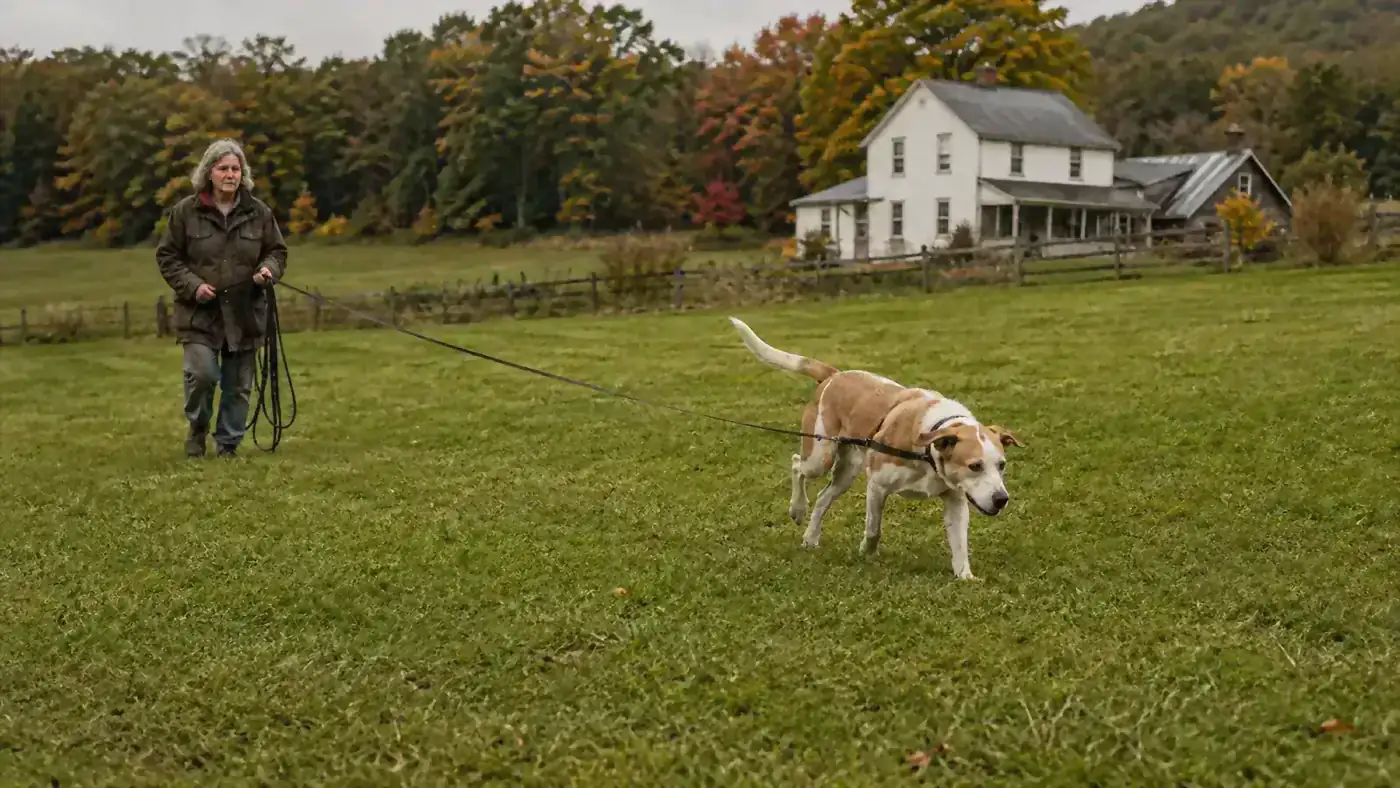
Ruggles is a Lab and hound mix who has never once come when called if there was something more interesting fifty feet away, which describes most of the county from his point of view. For the first two years I had him, I walked him on a standard retractable leash because that's what was already hanging by the door, and it worked fine right up until it didn't. Then a friend at the feed store mentioned she'd switched her own dog over to a Hi Kiss long line for recall practice, and I decided to run both side by side and see which one actually did something for a dog who treats his own name as a suggestion.
The short answer is that they're not really solving the same problem, even though people shop for them like they are. The Hi Kiss long line is built for teaching a dog to come from real distance in an open field, and it did that job well over a full season, roughly five months, of near daily use with Ruggles. The retractable leash is built for controlled walks in tighter spaces, sidewalks and neighborhoods where thirty feet of slack would get you both run over. Neither one is a bad product. They're built for different jobs, and picking the wrong one for your actual situation is where most of the complaints I hear come from.
| Hi Kiss Long Line | Retractable Leash | |
|---|---|---|
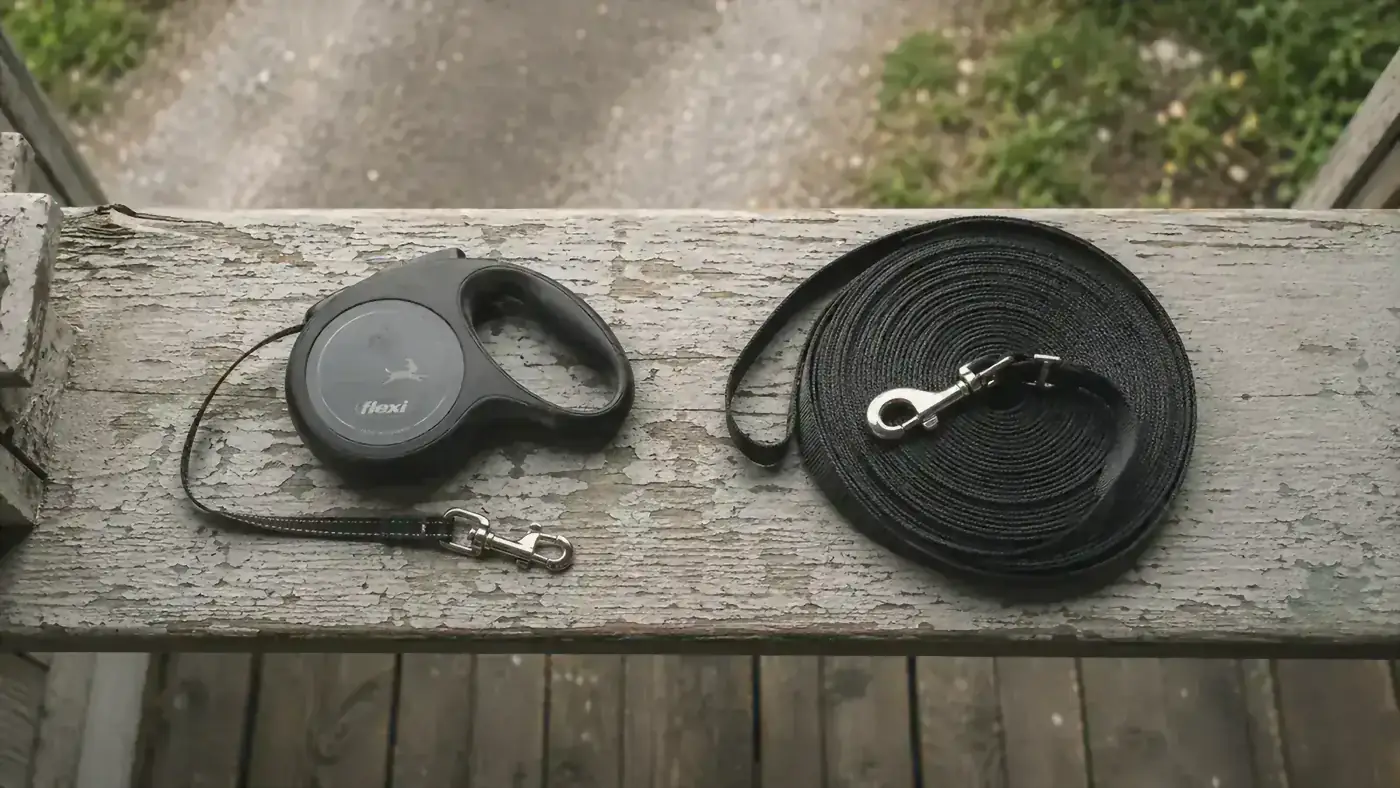
| Length range | 15, 30, 50, and 100 foot options | Typically 10 to 26 feet of cord |
| One-handed handling on a normal walk | Two hands recommended, slack needs managing by feel | Reels in and out with one hand, no coiling required |
| Built-in stopping mechanism | None, you stop it by planting a foot or hand on the line | Button-lock brake, though it can fail under a sudden hard pull |
| Injury risk to the handler | Rope burn is possible if it runs fast through a bare hand | Thin cord can cause serious lacerations or worse on a sudden bolt |
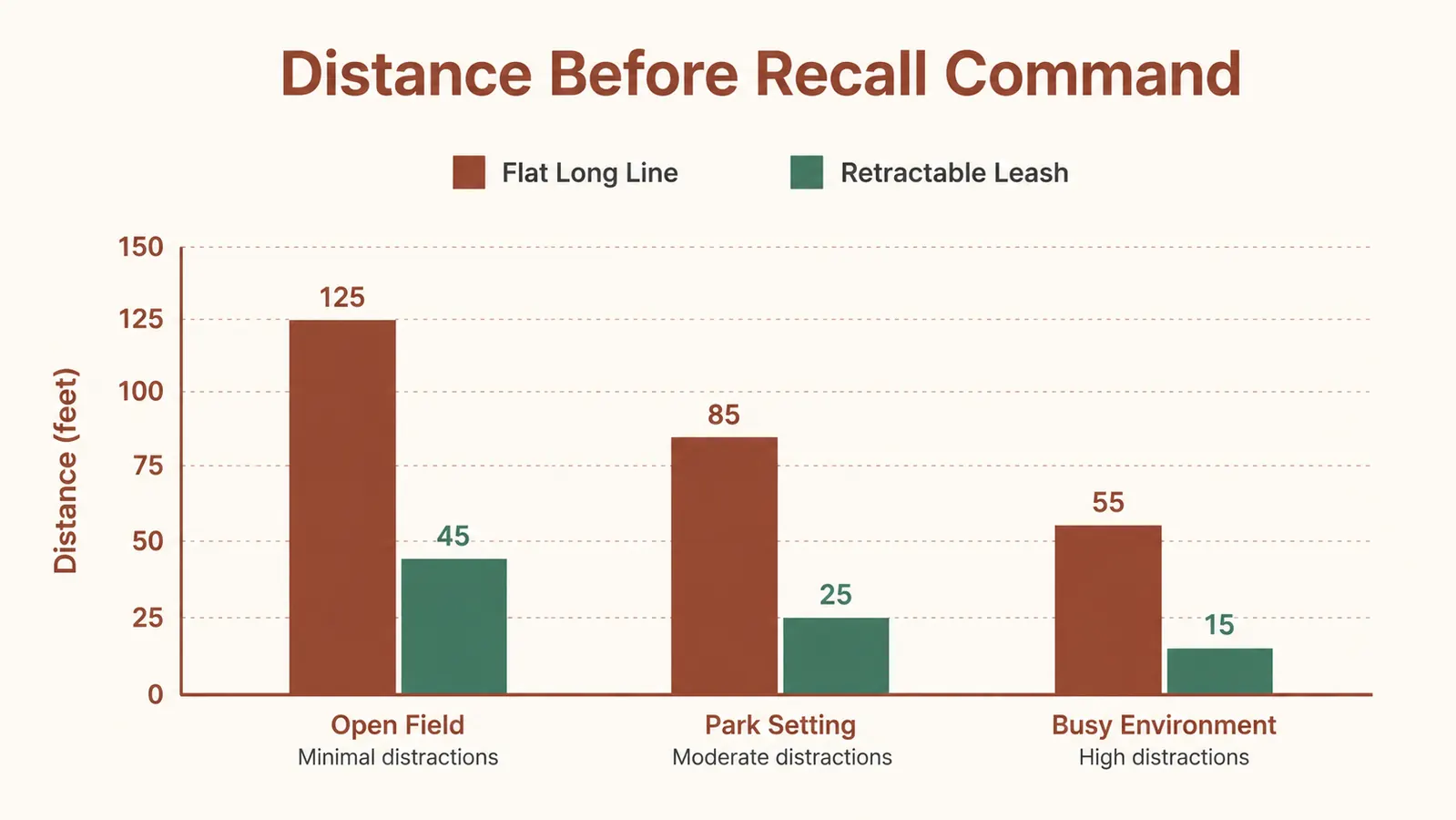
| Teaching real recall at distance | Purpose built for it, lets a dog range well past thirty feet before you call | Not designed for this, most models top out around sixteen feet |
| Tangle risk in brush or tall grass | Flat line snags on brush, weeds, and fence posts | Cord stays mostly retracted, less snagging in open terrain |
| Durability over a full season outdoors | Nylon webbing shrugs off mud, dew, and repeated washing | Housing and the internal spring are the common failure point |
| Price at time of writing | Roughly 8 to 15 dollars depending on length | Roughly 15 to 30 dollars for a comparable brand |
Where the Hi Kiss Long Line Wins
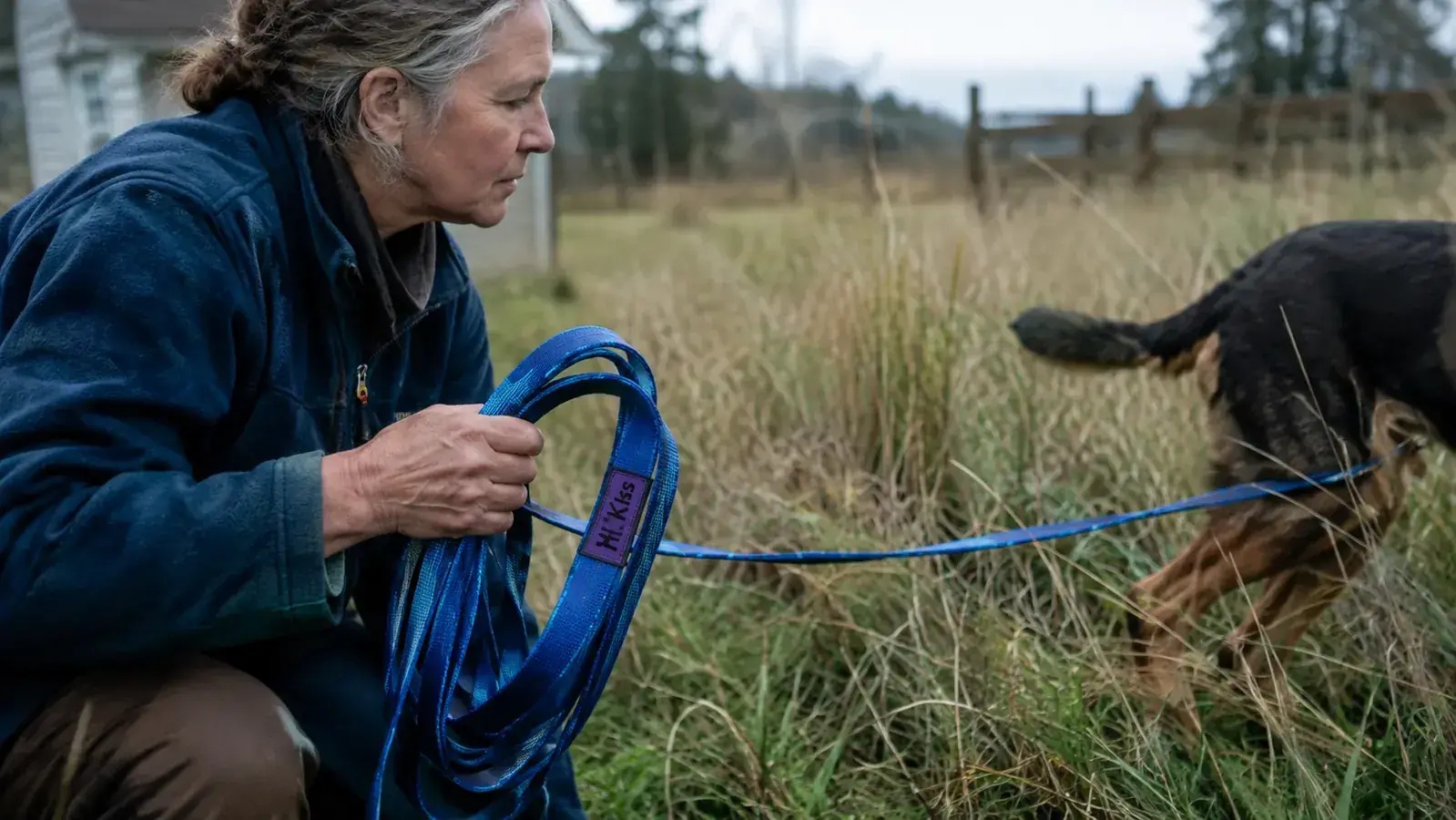
The Hi Kiss long line wins on the thing it was actually built for, which is letting a dog get real distance from you before you ask him to come back. That distance is the entire point of recall training. A dog who only ever practices coming from six feet away hasn't learned recall, he's learned to respond to proximity. Once I started running Ruggles out to thirty and forty feet on the hundred foot Hi Kiss line, in the fenced field behind the house, the difference in how hard he had to actually choose to come back was obvious within the first couple of weeks.
It also held up better physically than I expected for something that costs less than a fast food meal. The flat nylon webbing on the Hi Kiss line went through mud, dew-soaked grass, a couple of accidental trips through the creek at the property line, and five months of near daily use without fraying at the clip or losing its stitching. The brass clip did pick up a little surface rust by month four, which I wiped down and kept using, but nothing about it felt like it was going to fail on me mid-walk the way I've had cheaper gear do.
Where the Retractable Leash Wins
I'm not going to pretend the retractable doesn't have real advantages, because it does. On an actual neighborhood walk, on a sidewalk, past other dogs and mailboxes and the occasional loose cat, a retractable leash lets you manage a dog's range with one hand and a thumb, no coiling, no feeding out slack, no tripping over forty feet of nylon line pooled at your feet. For a dog who already has decent leash manners and just needs some give without a full stop-and-go correction every ten feet, the retractable does that job more comfortably than a long line ever will.
It also stays tidier in tight spaces. A long line dragged across a sidewalk is a tripping hazard for you, for the dog, and for anyone walking toward you, and I've had it happen more than once when I forgot to gather slack before a jogger came around the corner. The retractable's cord mostly stays out of the way because it reels itself in, which is a real convenience I don't want to undersell just because I ended up preferring the long line for training work.
If actual recall distance is the problem you're trying to solve, this is the tool built for it
The Hi Kiss long line let Ruggles practice coming back from thirty and forty feet out, which a retractable was never built to do. Check today's price and pick the length that fits your space.
Amazon Check Today's Price on Amazon →How I Actually Tested Both
This wasn't a controlled study, it was one dog, one field, and a lot of Sunday afternoons. I ran the Hi Kiss long line with Ruggles in our fenced half acre for a full season, roughly five months, starting when the grass was still wet and ending when we needed jackets for the evening sessions. I kept the retractable leash in rotation for our actual neighborhood walks the whole same stretch, so I had a direct comparison running the entire time instead of testing one, putting it away, and trying to remember how the other one felt months later.
What I tracked was simple. How far out could Ruggles get before a recall command actually meant something, versus just being the sound I make right before he gets clipped back onto a shorter line. How often the gear itself caused a problem, tangling, slipping, cord snapping back too hard, line snagging on the fence post by the garden. And how the walk actually felt in my hand, because a tool that trains well but makes every walk a wrestling match isn't one most people stick with past the first bad week.
The Real Safety Record, Not the Marketing
I want to be straight about this part because I've seen both sides get oversold. Retractable leashes have a real, documented injury record, and it's not just internet horror stories. Vets and emergency rooms have logged rope burns, deep finger and hand lacerations, and even amputations from the thin cord when a dog bolts hard and the handler grabs at the line. The button-lock brake can also fail under enough sudden force, which defeats the whole point of the mechanism at exactly the moment you needed it to hold.
The Hi Kiss long line isn't risk free either, and I won't pretend otherwise. Flat nylon line run fast through a bare hand will burn you, and a hundred feet of line on the ground is a genuine trip hazard if you're not paying attention to where it's laid out. But the mechanism of injury is different. You get burned by mishandling the long line yourself. With the retractable, the thin cord itself is the injury risk, independent of how carefully you're holding it, and that's the distinction that made me trust the long line more over five months of daily use.
Length, Slack, and What It Actually Teaches the Dog
There's a training difference here that matters more than either the price or the safety numbers. A retractable leash teaches a dog to pull against constant light tension, because that's how the mechanism works, it reels out under resistance and reels in when the dog backs off. Over time that can actually reinforce pulling rather than curb it, which is the opposite of what most people buying one are hoping for.
A long line like the Hi Kiss doesn't work that way. There's no constant tension teaching the dog anything while he's out at the end of it. He's just loose, the way he'd be off leash, right up until you call him and he either comes or he doesn't. That's a cleaner training signal. You're not fighting a spring-loaded mechanism that's quietly working against your recall goals every time the dog leans into it. For a dog like Ruggles, who needed to learn that coming back was his own choice and not a mechanical inevitability, that difference mattered.
A retractable leash reels out under resistance and reels back in when the dog backs off, which can quietly reinforce the exact pulling habit most people are trying to fix.
What a Full Season of Field Use Looked Like
The first month with the Hi Kiss long line was honestly a little discouraging. Ruggles hit the end of the line at a dead run more than once, and I learned fast to keep a glove on my throwing hand and never let the slack pile up faster than I could gather it. By week six the pattern started to shift. He'd get out to twenty or thirty feet, hit something interesting, and instead of ignoring me outright he'd at least glance back before committing to whatever smell had grabbed him. That glance back is the whole ballgame with a hound mix, and it took real repetition on real distance to get there, not a couple of weekend sessions.
By the fourth month I could call him off a rabbit at close to fifty feet more often than not, which was not a thing I would have believed possible the previous spring. Gene, who works nights and mostly sees the results rather than the process, noticed it first when Ruggles came back off the tree line on his own one evening without me saying a word twice. Alison borrowed the Hi Kiss line for a foster dog with a similar problem and reported the same slow, gradual shift over her own several weeks of use. None of that happened the two years he spent on a retractable, because a retractable never let him get far enough away to actually need to choose me over the rabbit.
Who Should Buy Which
If you're trying to build real recall, a dog who comes when called from real distance and not just from six feet away on a tight leash, get the Hi Kiss long line and set aside time in a fenced yard or open field to actually use it. Five months of consistent sessions is what turned this from a gimmick into a habit for us, and I don't think it would have worked nearly as well compressed into two or three weeks. If what you actually need is a comfortable, one-handed way to give a well-mannered dog some give on a regular neighborhood walk, the retractable still has a place, just understand the injury risk that comes with the cord and never wrap it around your hand. For the full write-up on how the training itself played out over the season, I've got the long-term Hi Kiss review here, and if you want the broader case for why distance work changes recall at all, this rundown covers ten reasons it's worth the habit.
Ready to see what a real season of distance recall practice looks like
The Hi Kiss long line was the clear winner for actual recall training in our head-to-head. See current pricing and lengths before your next field session.
Amazon Check Today's Price on Amazon →