
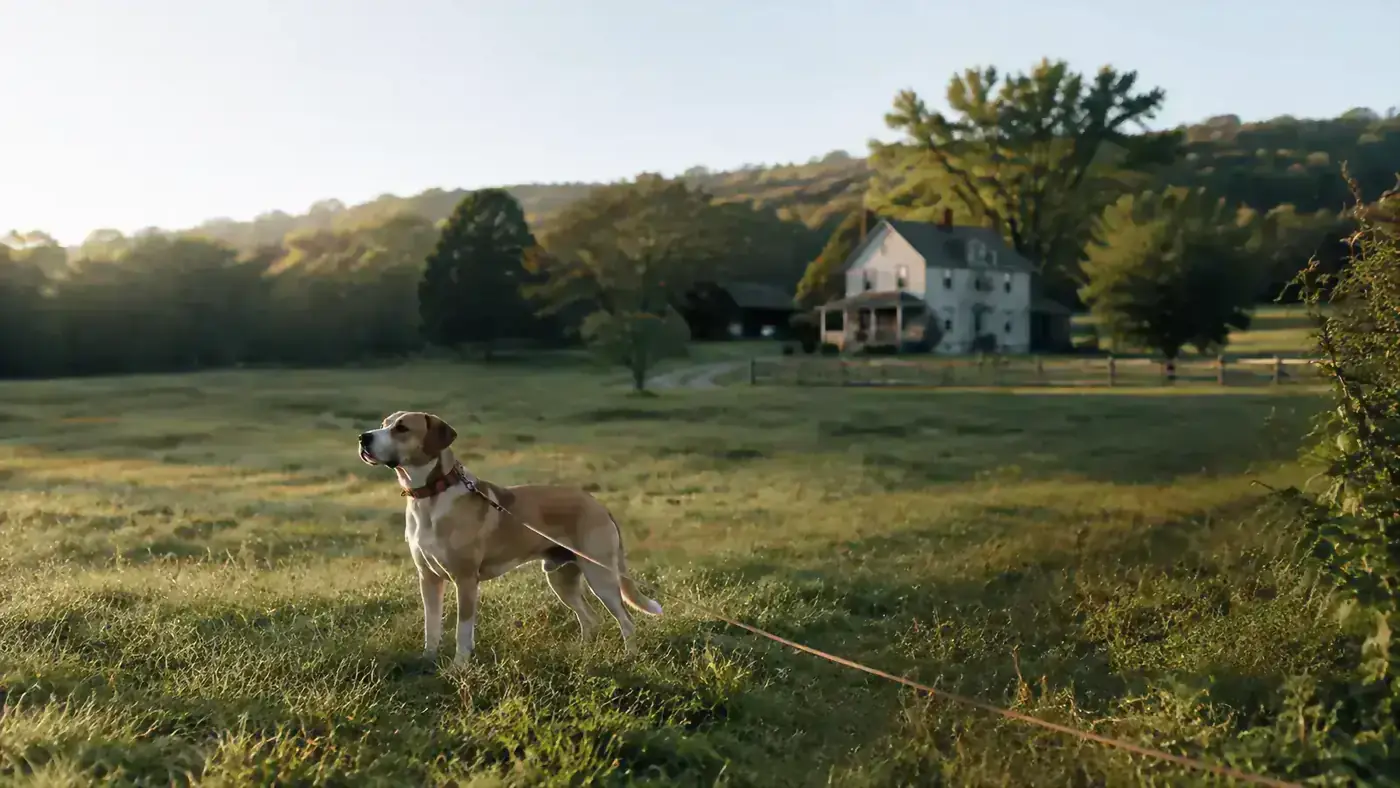
Ruggles has a nose that overrides every command I own the second it catches something worth following, and for years that meant chasing him down the gravel drive in whatever I happened to be wearing that morning. The Hi Kiss long line changed that, not overnight, but across one full season of near-daily drills in the field, the fenced half-acre, and eventually a dog park two towns over with my daughter Alison. Here are ten actual reasons a long line beats guessing at off-leash recall before the training is finished, based on what happened with a seventy-eight-pound Lab and hound mix who has never once let a squirrel go uninvestigated.
None of this is a substitute for a trainer if you're dealing with real aggression or fear-based reactivity. This is what I watched work, and where it fell short, over a full season with a dog whose only problem is that the world smells better than I sound.
Tired of Testing Recall You Don't Actually Trust Yet?
A long line lets you build real distance without betting on a command that isn't proven yet. Check today's price on the Hi Kiss line and pick a length that fits your space before you gamble on off leash.
Amazon Check Today's Price on Amazon →You Get to Test the Real Choice Without Gambling On It
A six-foot leash never actually tests whether a dog would choose you over a distraction, it just physically prevents the question from coming up. Thirty feet of line lets Ruggles get far enough away to genuinely decide between a scent trail and me, which is the entire point of recall training. The Hi Kiss line gave me that distance in the open field behind the house without ever betting the outcome on a command that wasn't proven yet.
Flat Webbing Doesn't Bite Into Your Hands Like Rope Does
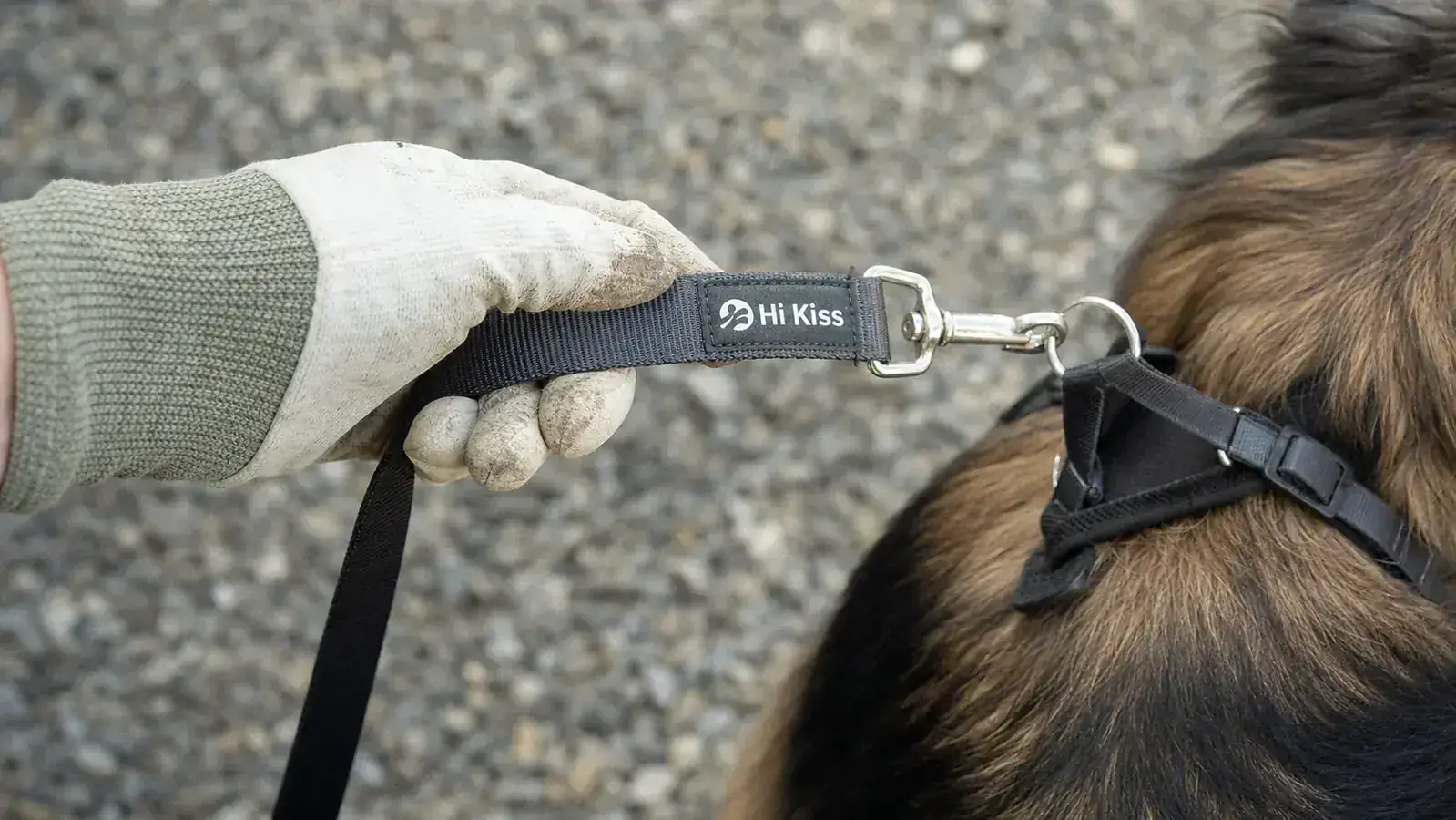
I tried a round-rope long line before the Hi Kiss line and gave up on it inside a week, because taking up slack fast under tension left a mark across my palm every single time. The Hi Kiss line is flat nylon webbing, and flat webbing distributes force across more surface area instead of digging into one thin line of skin. I still wear a light garden glove when Ruggles is dragging it at a dead run, but the difference between flat and round is the reason I kept using this one past the first bad afternoon.
It Clips to a Harness, Not a Neck, at Real Speed
Thirty feet gives a seventy-eight-pound dog room to build actual momentum before hitting the end of the line, and that kind of sudden stop against a collar puts the force straight against the trachea. I clip the Hi Kiss line to Ruggles' harness every single time, never his collar, so a hard hit spreads across his chest and shoulders instead of his neck. That one decision matters more than any command I've ever taught him.
Length Options Mean the Line Scales With the Space
The Hi Kiss line comes in lengths from fifteen feet up past a hundred, and picking the right one for the space you're actually in matters more than reaching for the longest option on the page. I use a shorter stretch of it for the gravel drive where the mail truck comes through, and let out the full thirty feet in the open field where there's nothing for a loose loop to tangle around. One line, several working lengths, no need to own three different leashes for three different situations.
It Catches the Exact Second a Dog Chooses Wrong
Recall training lives or dies on timing, and a long line is the only tool that lets you interrupt a dog mid-decision instead of after the decision is already made. When Ruggles' nose dropped into a scent trail and his body started drifting away from me, the line gave me a way to break that moment gently and redirect him back before he'd fully committed. Off leash, that same moment just ends with him thirty yards out and gone.
A Clip That Doesn't Pop Open Builds Real Confidence
The bolt-snap on the Hi Kiss line never once opened on its own across a full season, including a handful of hard hits when Ruggles reached the end of it at a dead sprint chasing something that got away clean. That mattered more than I expected going in, because a clip failure at distance means the dog is simply gone. Trusting the hardware is half of trusting the whole exercise enough to actually push distance further.
Consistent Tension Teaches Something, Unpredictable Tension Doesn't
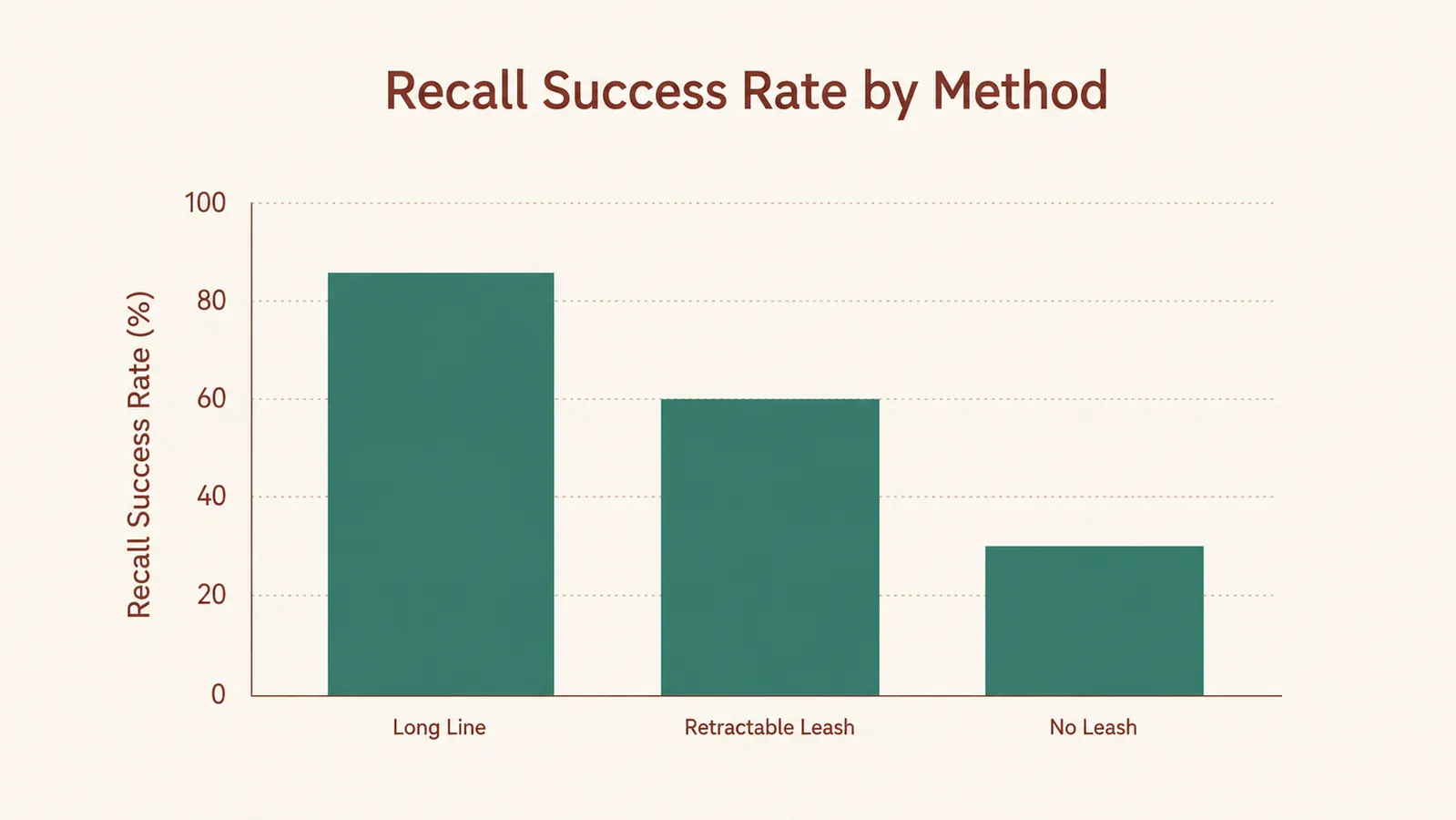
I owned a retractable leash before this and the mechanism jammed twice with Ruggles at a full run, which taught him that leash tension is random and occasionally surprising rather than something he can predict and respond to. A long line stays the same from the first foot to the last. I laid the two tools out fully in my full season Hi Kiss long line review if you want the longer version of why that difference changed how fast Ruggles actually improved.
It's Cheap Enough That a Bad Tangle Isn't a Disaster
Thirty feet of line dragged through mud, gravel, and tall grass all season picks up wear, and mine has the faded, dirt-stained look to prove it. Because it didn't cost much to begin with, I never once babied it or avoided a muddy field to keep it clean, which meant I actually used it every day instead of saving it for good weather. Gear you're afraid to ruin is gear that quietly stops getting used.
It Builds Toward Off Leash Instead of Betting Everything On It
A long line is a staged step, not a permanent leash. The goal from day one was a recall reliable enough to eventually drop the line entirely, but I wasn't willing to test that in an open field the first time I felt hopeful about his progress. Working through distance and distraction on a line first means the actual off-leash test, whenever it comes, isn't a gamble with a dog running toward a road. If you want the exact staged approach I used, I wrote it out step by step in how to train recall with a long line.
It Forces You to Actually Watch Your Dog
Holding a long line means paying attention, tracking slack, watching body language, noticing the exact moment a dog's ears shift toward a smell before he even commits to chasing it. That habit of watching closely, built session after session with the Hi Kiss line in hand, taught me more about Ruggles' warning signs than any command word did. A recall improves faster when you're reading the dog well enough to interrupt the choice before it's fully made, not just reacting once he's already gone.
What I'd Skip
I wouldn't reach for a long line at all if your dog is reactive or fearful around other dogs and people, since managing thirty feet of moving line during a reactive episode is genuinely dangerous for everyone nearby, including your dog. I wouldn't buy the hundred-foot option as a first purchase either, that much line turns into an unmanageable pile the first time a dog runs a wide loop, and most handlers do better learning to manage thirty feet well before reaching for more. I also wouldn't tie one off to a fence post or a belt loop and walk away. It's a tool you actively hold, not a stake in the ground.
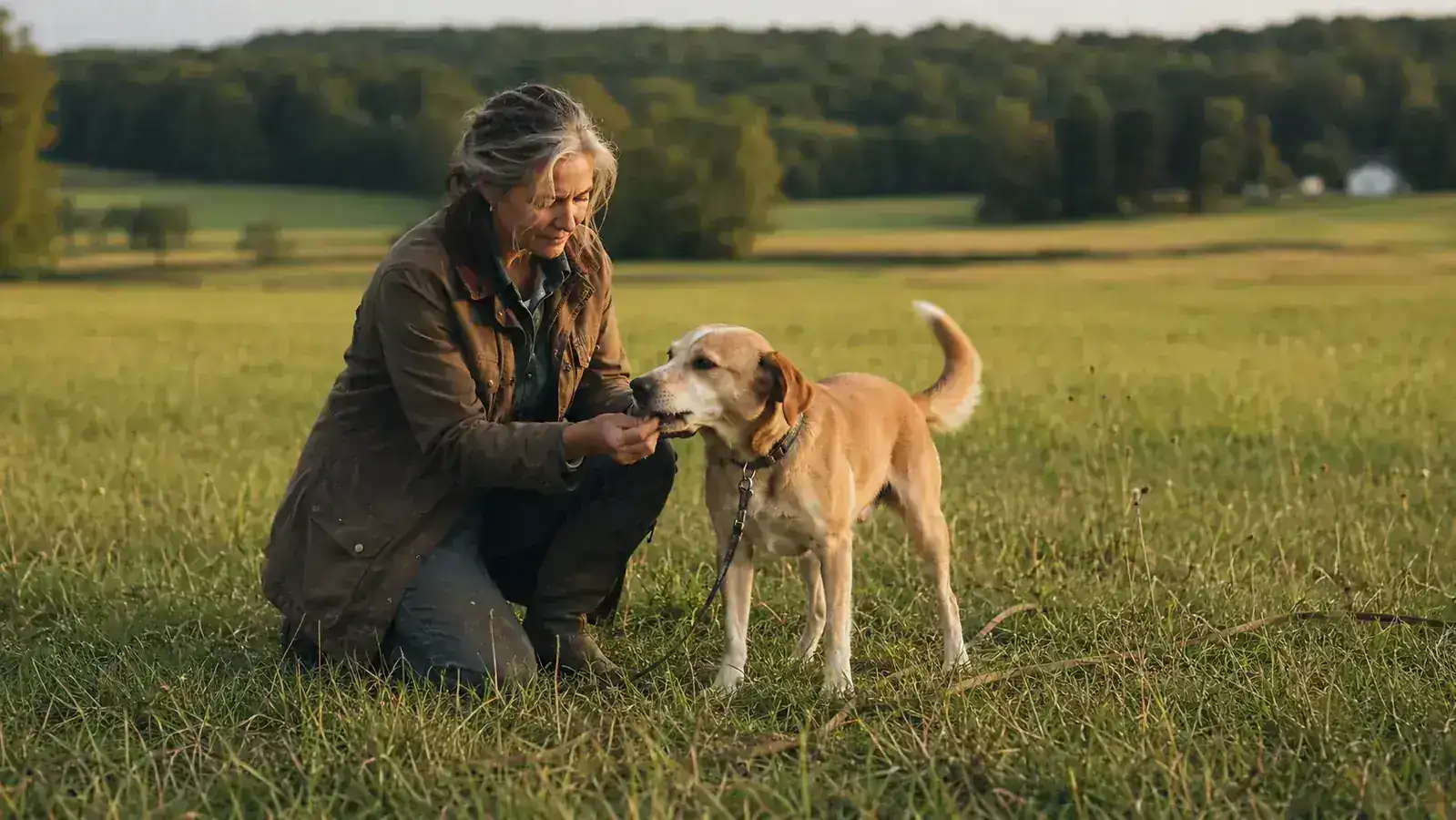
A long line doesn't train recall by itself. It just gives you a chance to catch the exact moment your dog chooses you over the smell, over and over, until choosing you gets faster.
Ready to Build a Recall You Can Actually Trust?
One full season with the Hi Kiss line took Ruggles from ignoring me completely to a recall I trust in the open field. Check today's price and pick the length that fits your space.
Amazon Check Today's Price on Amazon →